Moral Distress and Charting Obligations in Understaffed SNF Units
Understaffing forces nurses to choose between resident care and the documentation that protects it.
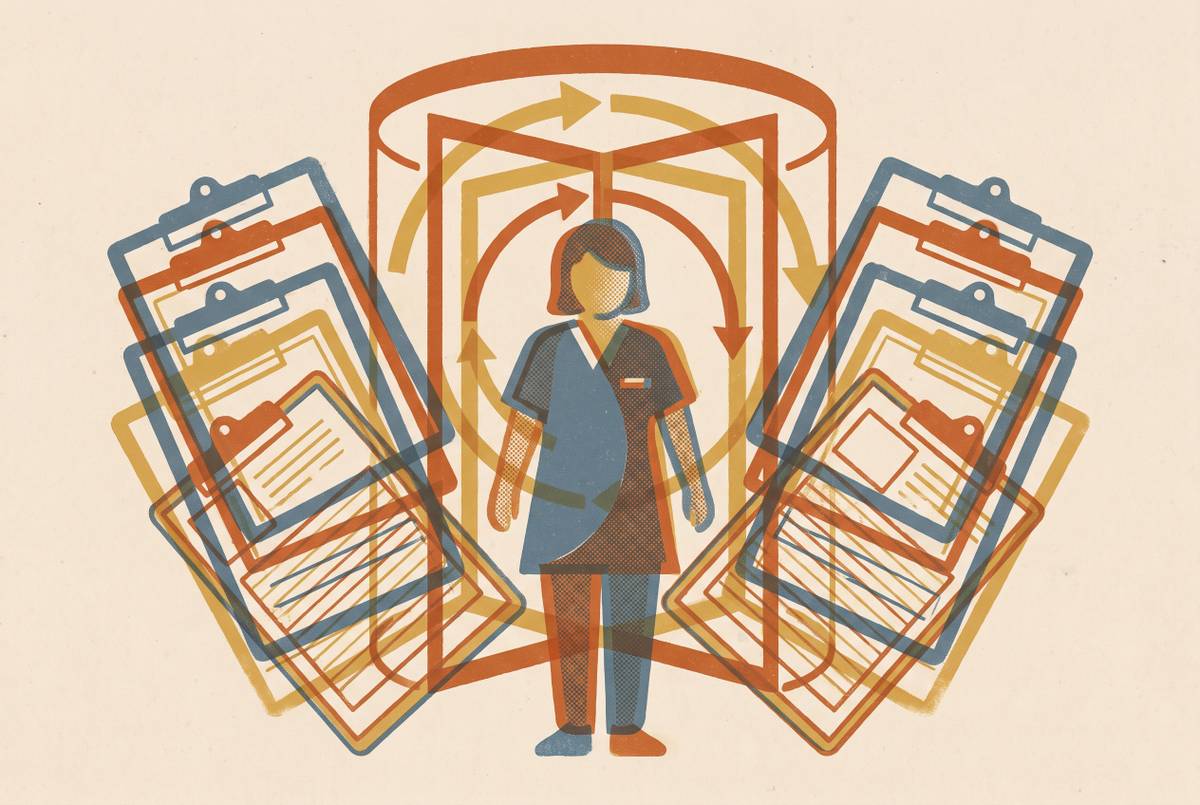
Documentation in skilled nursing facilities has turned into a moral trap: nurses are asked to choose, in real time, between the resident in front of them and the paperwork that protects that resident later, and short-staffed units make that choice constant rather than occasional. That definition matters because it locates the problem outside the nurse. It's a condition produced by the system, not the nurse, when demand outpaces what the schedule and staffing ratio allow. It's what happens when someone knows what good care requires and the building, the schedule, and the staffing ratio won't let them deliver it.
A 2025 phenomenography study in Nursing Open got at this directly by interviewing 20 nurses across three nursing homes about their experience caring for residents with dementia How Nursing Home Nurses Who Care for Residents With Dementia Experien…. Moral distress in a nursing home is tied to the slower, cumulative nature of long-term care, where the same missed task repeats daily rather than resolving in a single crisis. Most education programs built to address moral distress don't reflect what nurses in older-care settings actually deal with How Nursing Home Nurses Who Care for Residents With Dementia Experien…. Generic training modules, written with acute-care assumptions baked in, address a different problem than the one nurses in older-care settings face.
None of this happens in a vacuum, though. Moral distress in SNFs traces back to a structural cause, and that cause is understaffing. Before getting into how charting becomes the flashpoint, here is what the staffing picture actually looks like heading into 2026.
The staffing reality SNF nurses are working inside in 2025–2026
The numbers are not subtle. HRSA projected a shortfall of roughly 78,000 registered nurses by 2025, and more than 100,000 nurses left the workforce in 2020–21 alone. RN shortages are projected to continue well beyond the current decade, with rural areas facing disproportionately larger deficits by 2037.
The shortage doesn't sit neatly at the bedside, either. A qualitative study of 94 SNF leaders conducted between January 2021 and December 2022 found gaps spanning every job role in the building, including direct-care nursing staff. That's an organizational problem, not a staffing-ratio problem, and it means the people who might otherwise absorb overflow work, like unit clerks, MDS coordinators, or admissions staff, are stretched just as thin. Projections say RN shortages will persist well past this decade, with rural facilities facing especially steep deficits by 2037.
Layered on top of the raw numbers is a regulatory environment that's been genuinely chaotic. CMS finalized federal minimum staffing standards in April 2024, publishing them in the Federal Register on May 10, 2024, with requirements including 24/7 RN coverage taking effect in phases starting June 21, 2024. Then the U.S. District Court for the Northern District of Texas vacated key provisions on April 7, 2025. HHS formally repealed the numeric minimums that December, and Section 71111 of Public Law 119-21 now blocks CMS from enforcing those minimums, including the 24/7 RN requirement, all the way until September 30, 2034.
So the federal numeric floor is gone. But nothing about survey pressure, Payroll-Based Journal audits, or the reimbursement and licensure consequences of a bad deficiency history has softened, and state law is now doing the numerical work that used to be done at the federal level. Facilities still have to staff to something real. They just can't point to a single federal number anymore to justify the plan.
What that means for the nurses actually on the floor is straightforward and grim. Close to 40 percent are weighing early exit, according to Nurseslabs. The ones who stay don't just do more work. They absorb the moral weight of an entire unit, and for that population, the ones who stayed when others left, charting causes daily distress because it has become another demand piled onto people already stretched thin.
Why charting becomes a moral burden when there are not enough staff
Documentation was always required. It's the legal record, the financial record, and often the only proof that care happened. When staffing is adequate, charting and bedside care coexist without much tension, one flows into the other over the course of a shift.
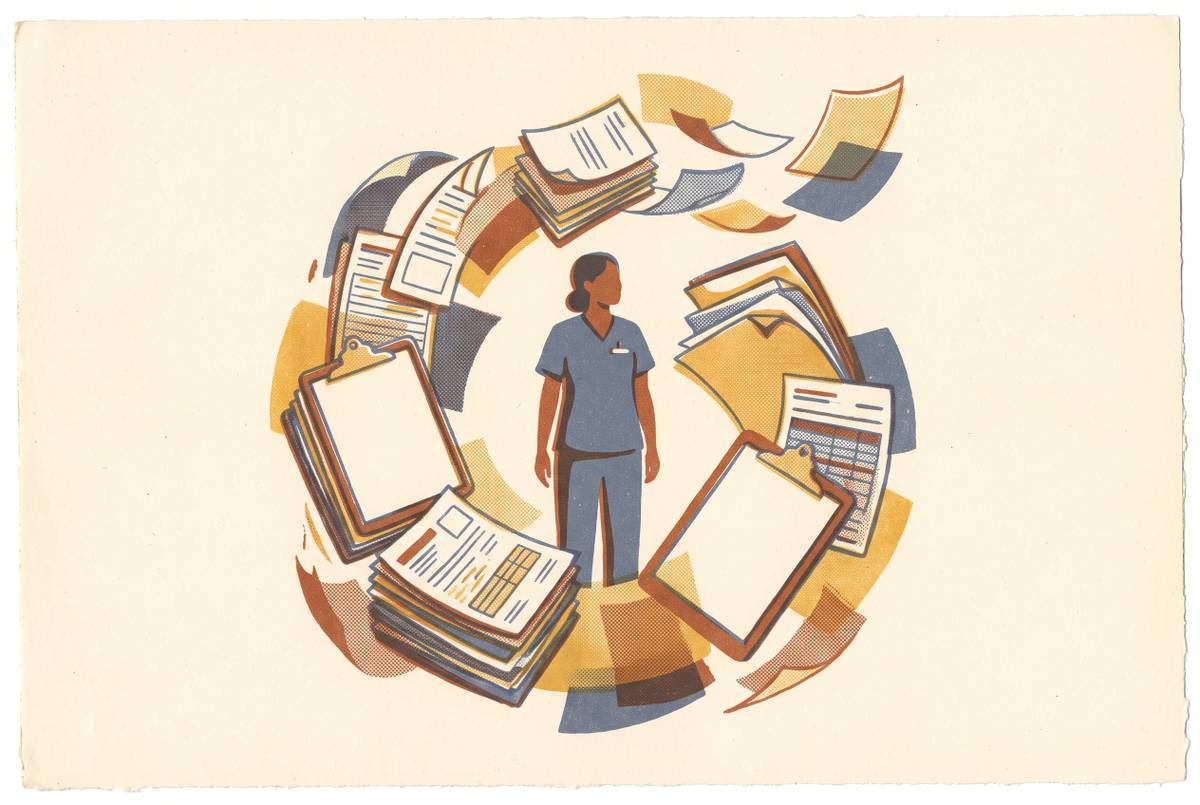
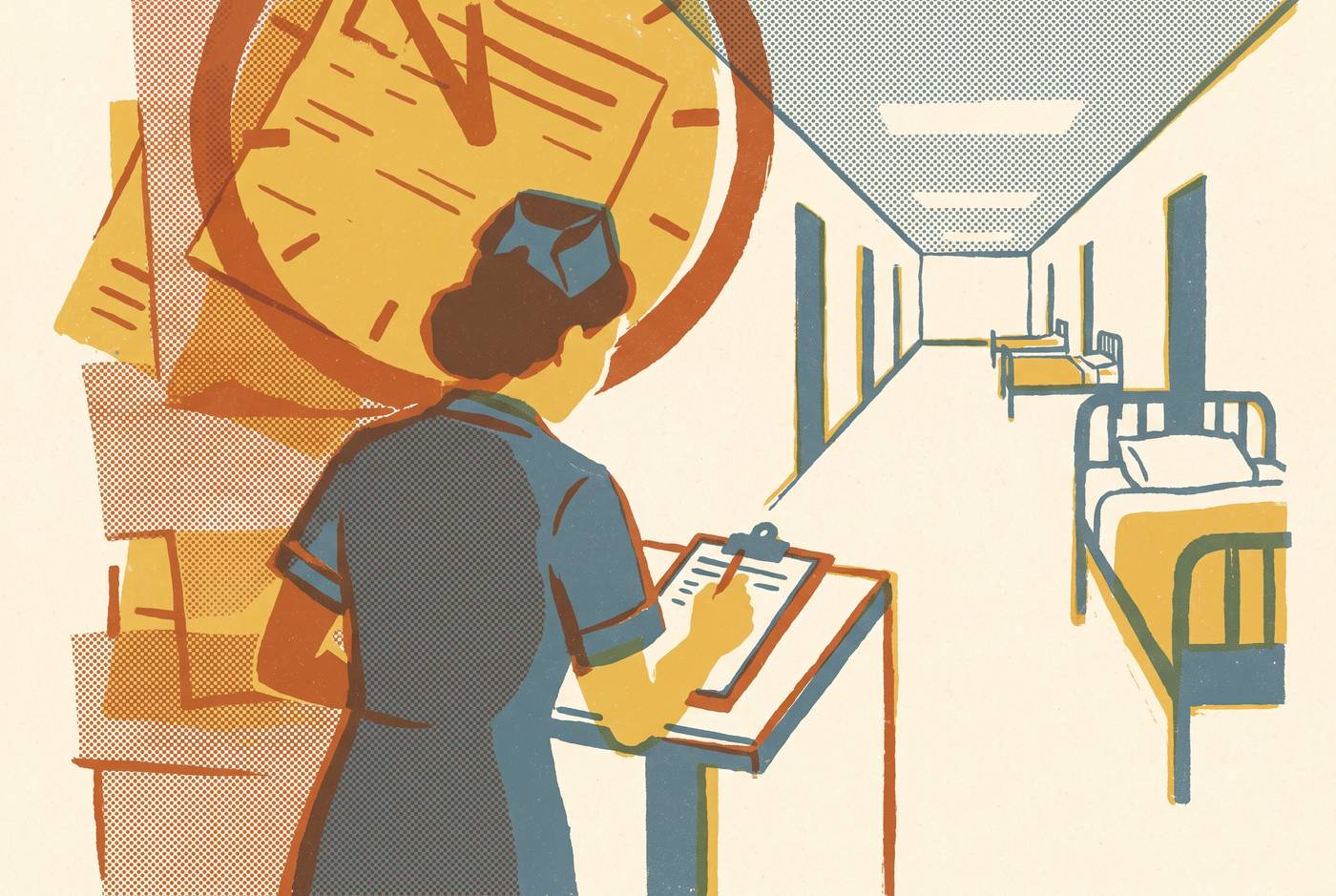
Picture the actual choice a nurse faces on a bad shift: attend to the resident who's agitated, in pain, or trying to get out of bed unassisted, or sit down and finish the chart that documents the last three residents already seen How Nursing Home Nurses Who Care for Residents With Dementia Experien…. The first is the obviously right thing to do in the moment. The second protects the resident legally, keeps reimbursement accurate, and satisfies the compliance apparatus that surveys the building every year. On a fully staffed floor, this isn't really a dilemma, because there's time for both. On an understaffed one, doing either one well means the other one suffers.
The AJN identified this pattern years ago: staffing shortfalls routinely block basic principles of patient care, and one of the downstream effects is reduced patient advocacy. Charting is often the first casualty, because it's the task that can be deferred, rushed, or shorthanded without anyone noticing in the moment. Applying the AACN's definition here isn't a stretch; it's a direct match How Nursing Home Nurses Who Care for Residents With Dementia Experien…. When understaffing, an institutional constraint, blocks a nurse from producing the timely, complete documentation she knows the resident needs, that's moral distress in its textbook form, not carelessness and not negligence.
The double failure stays invisible to anyone outside the unit. When a care step gets skipped under pressure, it usually doesn't get charted either, because there's nothing to chart. The documentation gap mirrors the care gap exactly, and both disappear from the record at the same moment. Nurses carrying that knowledge, knowing incomplete charting raises both facility risk and resident risk, and being structurally unable to fix it shift after shift, accumulate something closer to moral injury than ordinary job stress. What makes 2025 and 2026 a particularly hard stretch to work through is that the documentation stakes attached to all of this have gotten heavier, not lighter, in both financial and regulatory terms.
What is required in SNF documentation right now, and the consequences when it falls short
The engine driving most of this pressure is the Patient-Driven Payment Model. CMS finalized FY2026 updates to PDPM, folded into MDS 3.0 RAI Manual version 1.20.1, effective October 1, 2025. PDPM ties the daily Medicare Part A payment directly to a resident's full clinical profile as captured in the record. Every dollar of reimbursement now depends on documentation accuracy in a way the old system didn't demand. Under the previous volume-based RUG-IV model, vague or templated charting was mostly a survey risk.
Survey exposure has tightened right alongside it. CMS released revised Long-Term Care Surveyor Guidance on November 18, 2024, with changes effective April 28, 2025, expanding expectations for MDS accuracy, care planning, and infection control documentation. F656, the tag covering comprehensive care plans, remains one of the most frequently cited deficiencies in nursing home surveys nationally, and it's largely preventable with a deliberate process. CMS also widened the SNF Value-Based Purchasing Program, going from one performance measure to four for FY 2026, with an expansion to eight measures starting in FY 2027. Clinical coding and care planning now have to line up with a growing list of tracked indicators.
The money at stake is not abstract. Insufficient documentation accounts for the largest share of improper payment errors in skilled nursing, a problem worth billions of dollars where the root cause is not clerical sloppiness but a straightforward lack of capacity to document properly. Without documentation happening on time, those events don't get flagged and they don't get fixed, so they repeat for the next resident.
The SNF Quality Reporting Program carries its own financial penalty for facilities that miss reporting requirements, a cost that operators already running on thin margins can't easily eat. And CMS reports that roughly 20 percent of Medicare patients get readmitted within 30 days of discharge, a share of which traces back to risk documentation and care plan updates that should have happened but didn't. Seen together, these numbers make the moral distress described earlier something more than a personal or clinical concern. It has institutional teeth, and leadership doesn't get to treat it as background noise.
How moral distress from documentation pressure feeds the attrition problem that makes understaffing worse
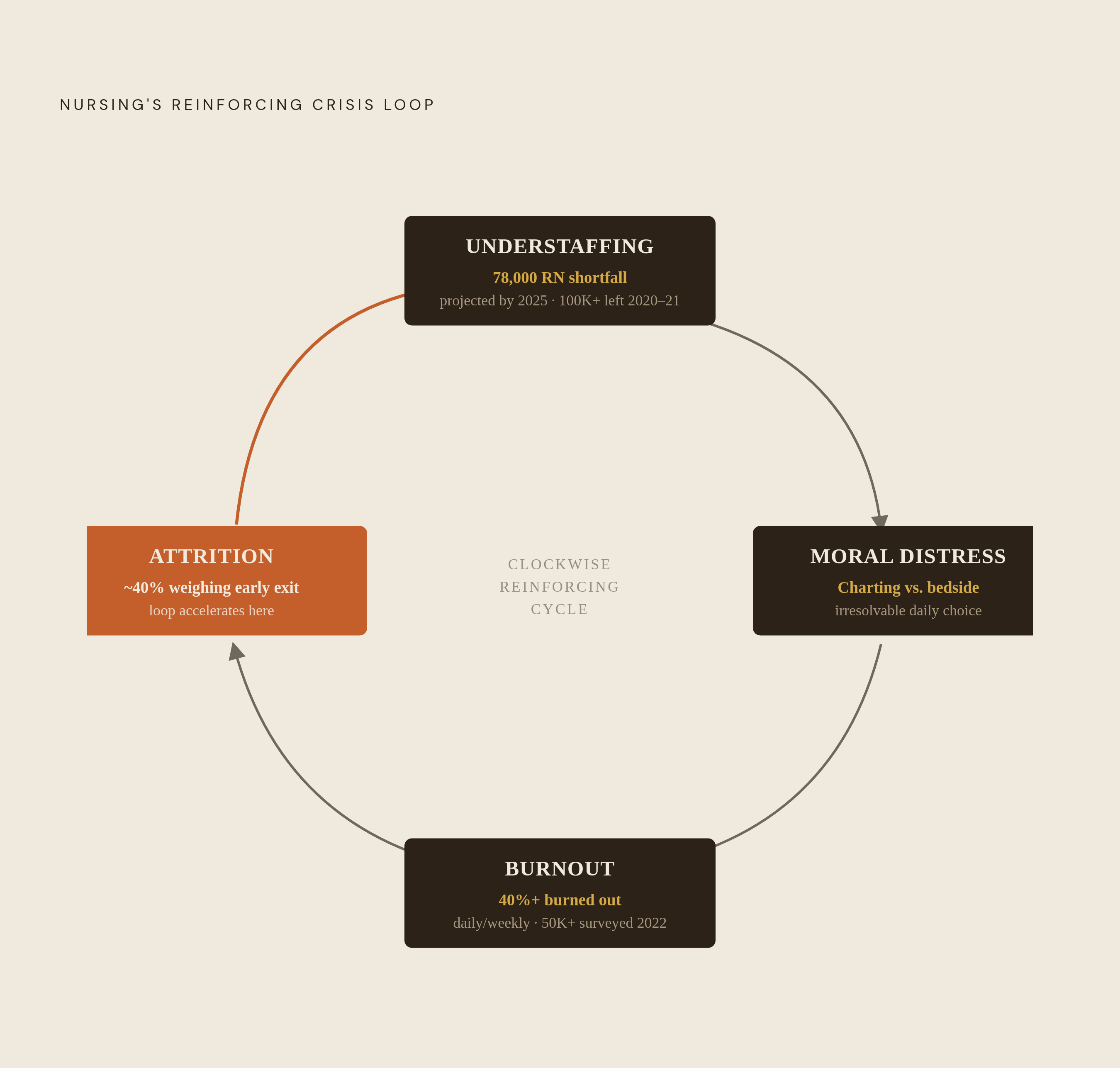
The cycle runs in a loop that's easy to describe and hard to break: understaffing produces moral distress, moral distress produces burnout, burnout produces attrition, and attrition deepens the understaffing that started the whole thing.
Burnout numbers back this up. A 2022 survey of more than 50,000 nurses nationwide found more than 40 percent reporting they felt burned out either daily or several times a week. Documentation plays a specific role inside that number. Charting stops feeling like professional practice and starts feeling like an obligation imposed without the time or staff to meet it, and that particular texture, the daily reminder of institutional failure, is different from generic work overload. It's the daily reminder of institutional failure layered on top of exhaustion. It's tired and complicit in a system that keeps asking for something it hasn't given the tools to produce.
The nurses who stay absorb exhausting workloads, take on elevated safety risks, and carry the weight of care they know, in their own professional judgment, was incomplete. That same qualitative study of 94 SNF leaders that found shortages across every job role also found that operational planning almost never accounts for the moral distress tied to documentation obligations. When it does get discussed, it gets filed under training or compliance, treated as a skills gap or a process gap, rather than named for what it is.
What gets lost when an experienced nurse finally leaves isn't just a line on the schedule. She's carrying informal knowledge about specific residents, the small behavioral tells, the family dynamics, the things that never made it into any EHR field, and none of that transfers when she walks out the door. Her departure leaves a documentation gap that the nurse who replaces her, however capable, simply can't fill on day one. If the underlying problem is structural, too much required of too few people, then the fix can't be to ask the remaining staff to chart faster or more diligently. That just adds another task to a pile that's already too tall.
Why "chart better" is not the answer
The instinct to solve this with more training is understandable and it's also backwards. The 2025 Nursing Open study is direct about it: education programs aimed at moral distress in older-care settings are thin on the ground and frequently miss the mark, because generic training doesn't address the actual capacity problem, which is understaffing that leaves nurses without the time to do the documentation training assumes they can do. Adding a new data-entry system runs into the same wall. Handing an already-behind nursing staff another interface to update makes the burden heavier, not lighter. The pre-survey scramble, the frantic chart review in the weeks before an inspection, adds the same kind of burden, piling reactive work onto the same nurses who already lacked time to chart thoroughly.
Any real fix has to work from documentation that already exists rather than asking nurses for more of it. That's the test every proposed tool or process should have to pass. Survey readiness, treated as a constant state rather than a seasonal sprint, means keeping documentation standards steady all year instead of cramming before an inspection. It means catching compliance gaps and resident risk before a surveyor or an adverse event finds them first, which is a fundamentally different posture than reacting after the fact.
Risk stratification built on top of existing electronic health record data is the clearest version of this. Tools that read what nurses have already typed into their charting systems, and surface residents running elevated risk of falls, medication errors, skin breakdown, behavioral shifts, or rehospitalization, without asking anyone to enter a single new field, address the understaffing and time pressure that drive the moral distress. They remove the impossible choice, at least partially, because the record a nurse already produced during a rushed shift becomes useful instead of just sitting there unexamined.
Time recovered this way affects how much attention clinical oversight and direct resident care actually get. When a nursing manager isn't spending hours manually hunting for compliance gaps in stacks of charts, that time goes back into clinical oversight and direct resident care, the work that drew most of these nurses into the profession. And the compliance landscape itself has gotten more complicated to navigate since the federal repeal, not less. With numeric minimums suspended until 2034, state statutes are now doing the primary work of setting numerical staffing requirements, and facilities need infrastructure that tracks resident acuity under the enhanced facility assessment rule that survived the repeal, not just a headcount on a spreadsheet.
None of this replaces adequate staffing, and no software claims to. But it can make sure the documentation nurses do manage to produce, even under pressure, gets fully used, so an incomplete chart triggers a visible alert somewhere in the system instead of quietly becoming invisible risk that surfaces months later as a survey citation or a readmission nobody saw coming.
Sources
- Nursing Shortage 2025: Safe Staffing Impact in the U.S. and the World - Nurseslabs
- Moral Distress : AJN, American Journal of Nursing
- How Nursing Home Nurses Who Care for Residents With Dementia Experience the Moral Distress? A Phenomenography Study - PMC
- AACN Position Statement: Moral Distress in Times of Crisis - AACN
- Long‑Term Care’s Staffing Crunch - Case Management Society of America
- Nursing 2025: No relief in sight as burnout, stress and short staffing persist | ScienceDaily
- Federal Register :: Medicare Program; Prospective Payment System and Consolidated Billing for Skilled Nursing Facilities; Updates to the Quality Reporting Program for Federal Fiscal Year 2026
- CMS Staffing Requirements for Nursing Facilities - Nava Healthcare