End-of-Shift Charting Pressure and Its Effect on Note Quality
Rushed end-of-shift charting creates vague notes that compromise patient safety.
End-of-Shift Charting Pressure and Its Effect on Note Quality.
How much of a nursing shift goes to documentation
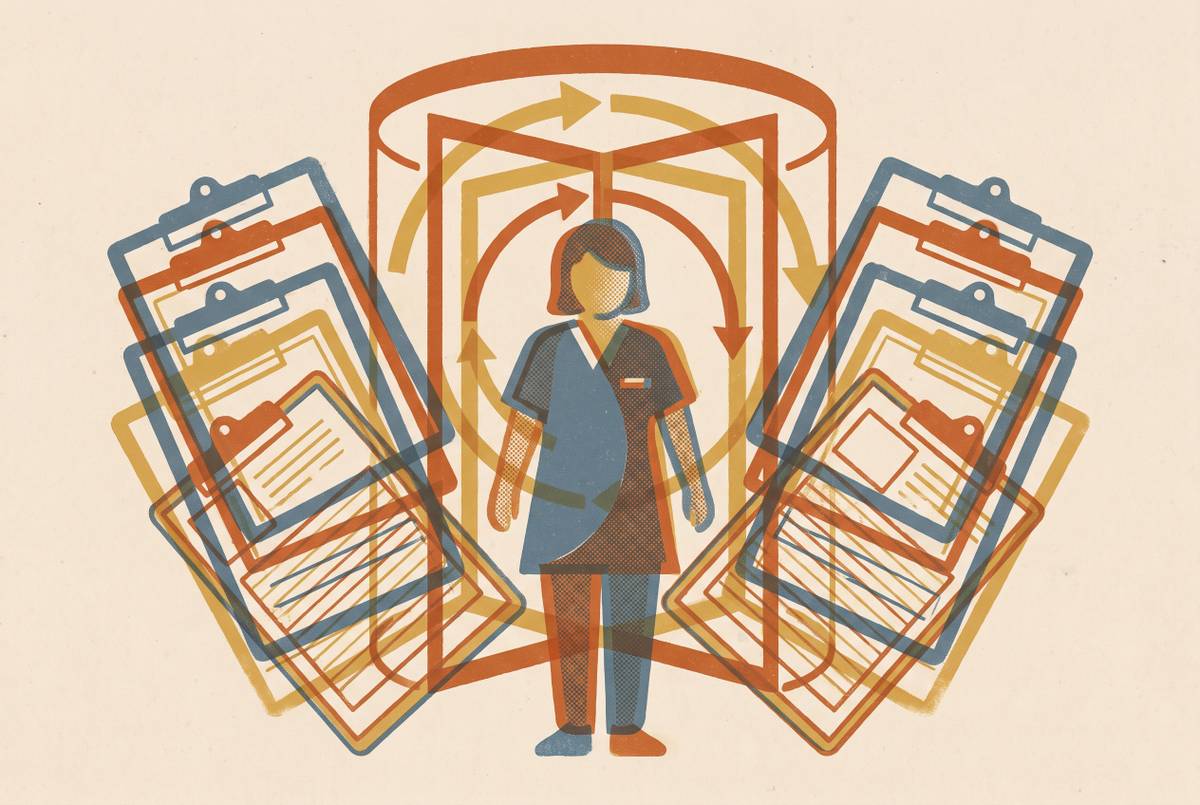
Documentation is a substantial share of the work itself, not a side task bolted onto nursing work. It is a substantial share of the work itself, and the figures make that hard to dismiss. Estimates put the range between roughly a quarter and 40% of a shift spent charting rather than at the bedside, with the U.S. Surgeon General's Advisory on Building a Thriving Health Workforce landing at the high end of that band https://tandemhealth.ai/resources/knowledge/where-nursing-documentation-time-goes-and-why-it-matters-for-ai. Cleveland Clinic's own operational data found nurses logging around 144 minutes per 12-hour shift inside the medical record system, a number the health system judged serious enough to launch a formal improvement program around https://tandemhealth.ai/resources/knowledge/where-nursing-documentation-time-goes-and-why-it-matters-for-ai. A separate study out of NYU Langone Health found nurses entering documentation into flowsheets at a volume running into the hundreds of entries per shift, averaging out to something close to one entry a minute across the entire workday. None of this is anecdote. It reflects a structural feature of modern nursing, where the volume of required documentation has grown steadily as regulatory and quality-reporting demands have multiplied.
End-of-shift differences
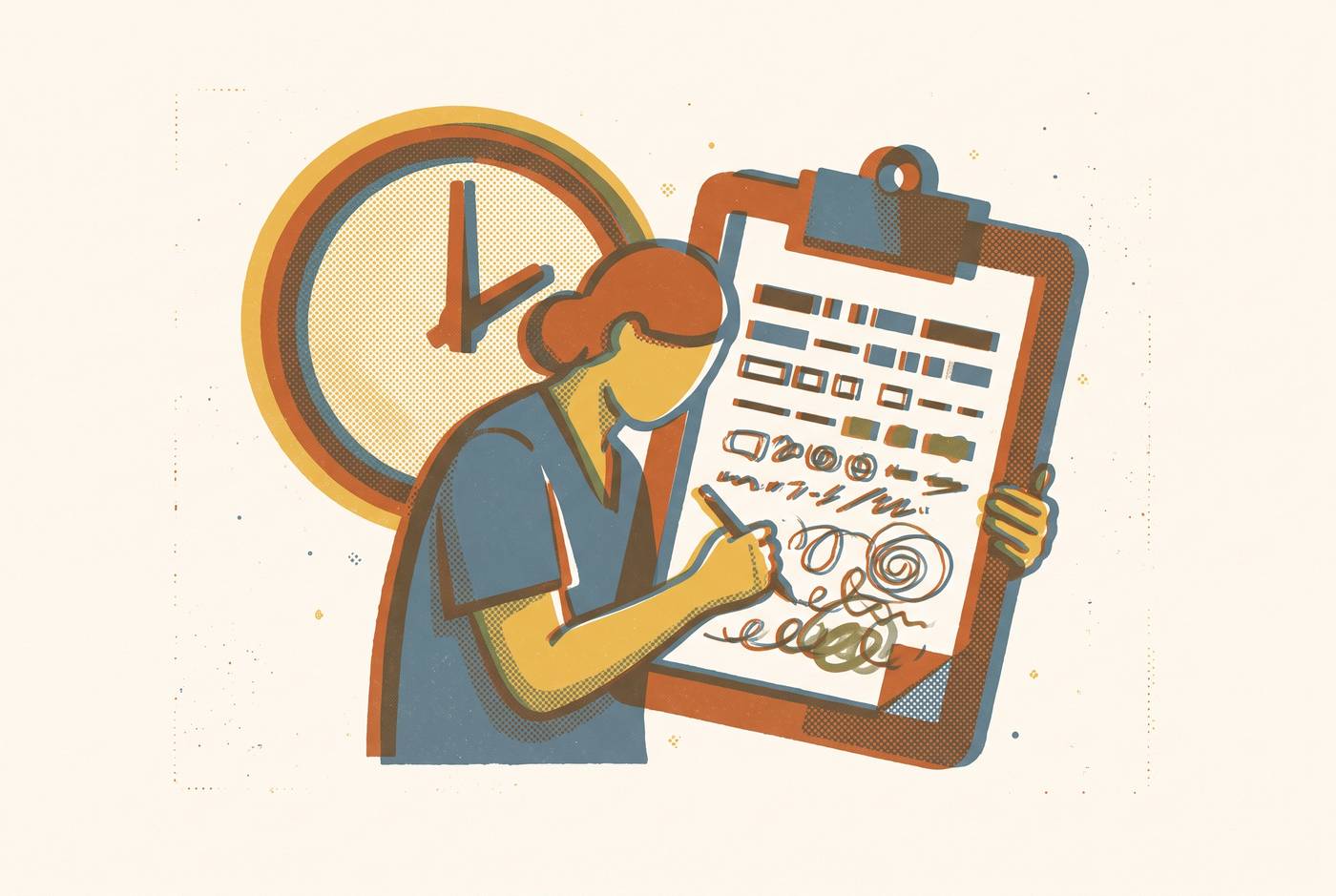
Charting load is not spread evenly across a shift, and treating it as though it were misses the actual mechanics of the problem. Some documentation is continuous by nature: vital signs, flowsheet entries, routine observations logged as they happen. Other categories cluster at specific, predictable points in the day. Admission paperwork, one of the single heaviest documentation events a nurse handles, lands at the start of a shift when attention is freshest. Discharge documentation does the opposite. Summaries, patient instructions, referrals, and sick notes tend to pile up in the final hours, precisely when cognitive load has already climbed to its peak for the day.
Handoff notes sit inside that same compressed window, and they carry more weight than almost anything else a nurse writes. The task is not simple transcription. It asks a fatigued clinician to take twelve hours of observation, intervention, and clinical judgment and compress it into language another clinician, one who was not in the room for any of it, can act on safely. That is a high-stakes cognitive task being asked of someone at the exact moment they are least equipped to perform it well.
What compressed, fatigued charting looks like on the page
Nursing documentation splits into two layers that behave very differently under pressure. Structured fields, checkboxes, vital sign entries, standardized scores, hold up reasonably well even when a nurse is exhausted and rushed. They are discrete, fast, largely binary. There is not much room for a checkbox to go vague.
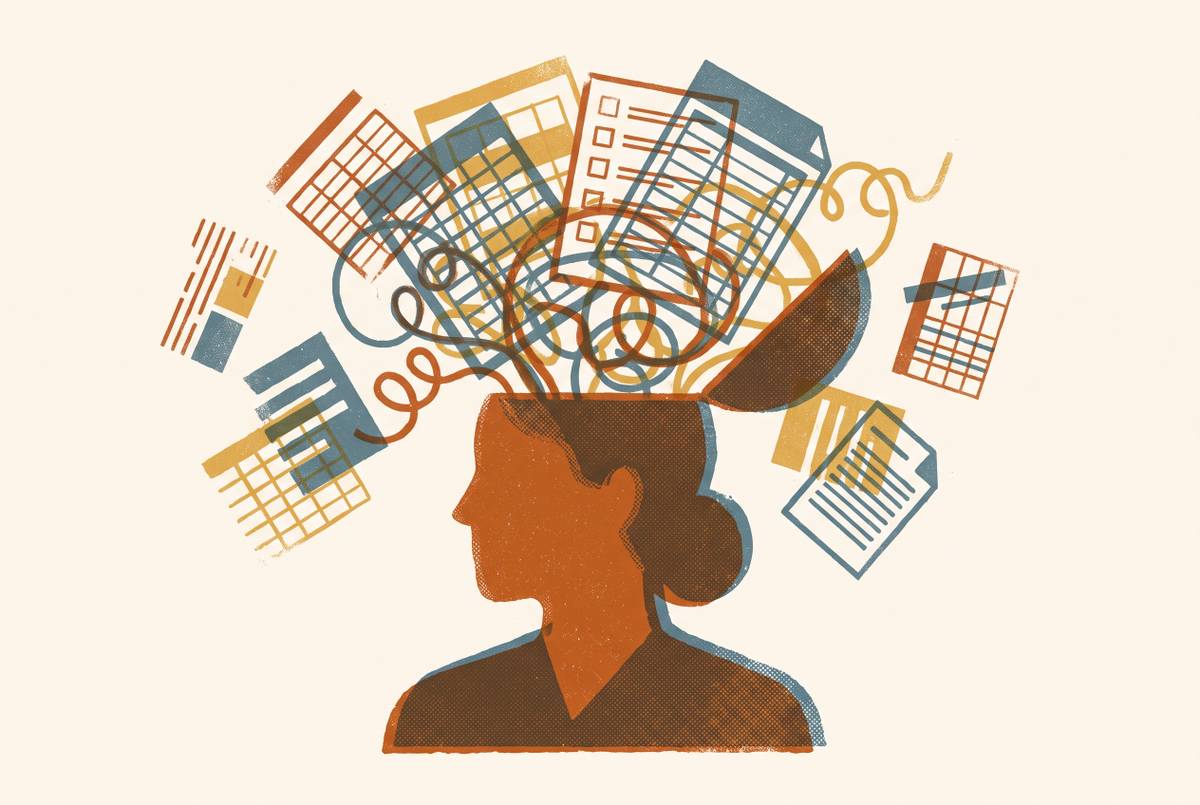
Narrative notes are where things fall apart. These require synthesis: pulling together an event timeline, explaining clinical reasoning, capturing the connections a nurse drew while actually standing at the bedside. That kind of writing depends on working memory and language precision, both of which degrade under fatigue and time scarcity. In skilled nursing facility settings, the failure modes are recognizable and repeat across sites. Notes get entered hours or even days after the care occurred, by which point memory has already gone hazy and details are simply gone. Entries get backdated or approximated in ways that erode credibility the moment a note is examined during litigation or an audit. Observations get left out entirely, not falsified, just never written down. And language turns vague in ways that blur clinical states that actually need to be distinguished from one another, a patient who is "resting comfortably" reads very differently from one who is "unresponsive to verbal stimuli but breathing regularly," and end-of-shift charting tends to default to the former phrasing even when the latter is closer to true.
Why vague notes matter beyond inconvenience at handoff
The incoming clinical team is only as good as the documentation handed to them. A note that compresses twelve hours of care into a single vague sentence gives the next nurse or physician nothing to build a clinical baseline from. Remembering everything that happened during a shift is not realistic for anyone. The chart exists because it is the only durable record of a resident's status and how that resident responded to treatment. When that record is thin, there is no backup. Nothing else stands in for it.
The downstream consequences are not abstract. Poor documentation drives miscommunication, clinical error, delayed treatment, and misdiagnosis, with effects that reach directly into patient safety and the quality of care delivered. In long-term care specifically, the exposure extends past the bedside. Documentation is what determines quality measures, survey outcomes, and disciplinary findings. A vague note is not just a clinical risk. It is a compliance liability sitting quietly in the record until a surveyor or an attorney finds it.
Thin notes and corrupted predictive-model data
Skilled nursing facilities are leaning harder on predictive analytics, and those models draw on electronic health record data, including clinical narratives, to flag residents at risk of hospitalization, falls, pressure ulcers, and functional decline. Extracting signal from clinical narratives remains difficult given how inconsistent documentation is across nurses, shifts, and facilities, and how much variation exists in clinical language itself.
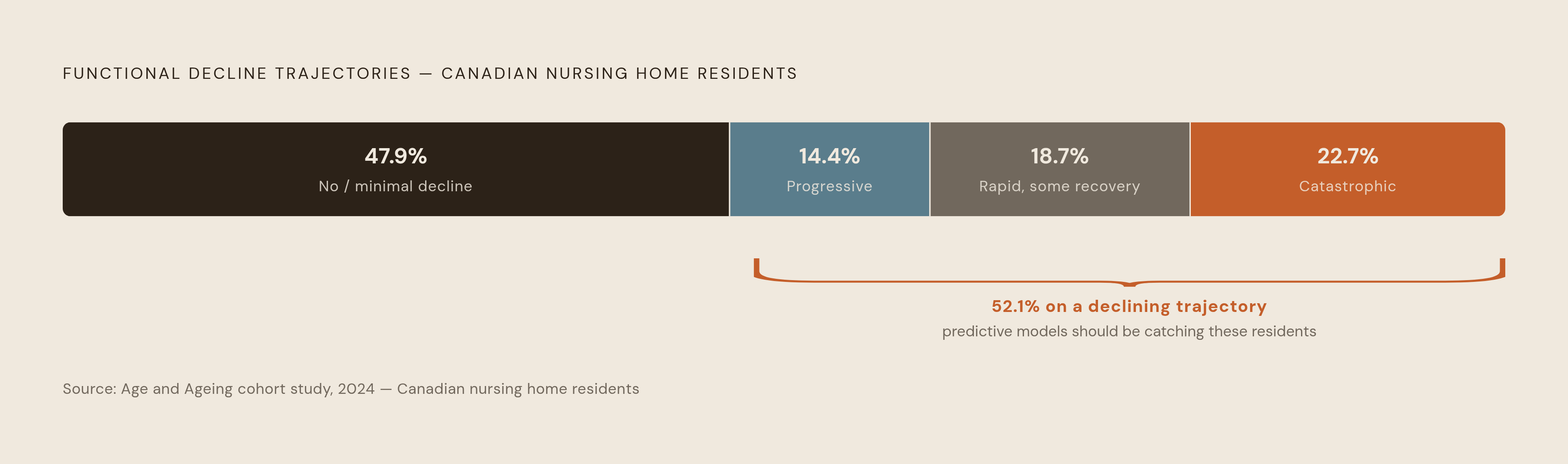
The stakes behind that data problem come from a specific, identifiable cause: staff exhaustion and time pressure at the end of a shift compress documentation into vague, backdated notes, and the resulting thin records are what feed directly into the outcomes described next. A 2024 cohort study published in Age and Ageing, following Canadian nursing home residents, identified four distinct functional decline trajectories. Nearly half of residents, 47.9%, showed no or minimal decline https://www.ncbi.nlm.nih.gov/pmc/articles/PMC11645752/. But 22.7% experienced catastrophic decline, 18.7% showed rapid decline with some recovery, and 14.4% followed a pattern of progressive decline https://www.ncbi.nlm.nih.gov/pmc/articles/PMC11645752/. More than half of the study population, in other words, was on a trajectory a predictive model should be catching early. A model can only catch what the record actually contains, and if the narrative notes feeding it are vague, backdated, or missing key observations, the early warning signs that separate "no decline" from "catastrophic decline" simply never make it into the data. A JAMDA-published model demonstrated meaningful accuracy in identifying SNF residents at risk of hospitalization within a seven-day window, using multiple data points including prior hospitalizations, chronic conditions, and vital signs.
The staffing context that makes this worse and unlikely to self-correct
None of this improves on its own, because the staffing math is moving in the wrong direction. Roughly 87% of nursing homes report moderate to high staffing shortages, so fewer nurses are already covering equal or larger resident loads. National projections point to a shortage running into the tens of thousands of full-time registered nurses in 2025, with only modest easing expected by 2030. Demand is rising at the same time supply is constrained: the U.S. population aged 65 and older grew 3.1% between 2023 and 2024, reaching 61.2 million people, and is projected to climb to 94.7 million by 2060 https://intuitionlabs.ai/articles/ai-documentation-skilled-nursing-facilities. Resident volumes are set to grow for decades while the workforce gap persists alongside them.
There is some recovery on the employment side. The nursing home sector added 40,700 jobs in 2025, but overall employment in the sector still sits 1.7% below pre-pandemic levels https://intuitionlabs.ai/articles/ai-documentation-skilled-nursing-facilities. The trend line is positive. It is nowhere close to closing the gap fast enough to relieve the time pressure driving thin, end-of-shift documentation. Expecting the problem to fix itself as staffing "normalizes" misreads how slow that normalization actually is against how fast the resident population is growing.
A less pressure-dependent documentation model in practice
The fix starts with when documentation happens: charting closer to the actual moment of care, brief notations made during or immediately after a patient visit and formalized before moving to the next resident, produces more accurate notes than tryi... Charting closer to the actual moment of care, brief notations made during or immediately after a patient visit and formalized before moving to the next resident, produces more accurate notes than trying to reconstruct an entire shift from memory at the very end of it. End-of-shift notes work best when they function as a synthesizing summary layered on top of documentation that already happened continuously through the day. They function far worse when they become the only substantive record of what occurred, which is exactly the failure mode fatigue and time pressure push toward.
Guidance on what a useful end-of-shift note actually needs to contain is fairly consistent, covering patient status and assessment findings, interventions performed, the patient's response to those interventions, any significant changes or incidents, and clear handoff information for the next shift. Specificity across each of those points is what separates a note that is actually useful from one that technically exists but tells the next clinician almost nothing.
At the organizational level, the more durable answer is a documentation review process that runs continuously rather than one that gets improvised in a panic before a survey. Catching gaps in assessments, care plans, and progress notes on an ongoing basis means those gaps get found by the facility itself, not by a surveyor working backward from an incident. That is a posture, not a project, and it separates documentation that merely satisfies the workflow of the moment from documentation that can actually be trusted later, by the next nurse, the next auditor, or the next predictive model trying to make sense of it.