SBAR Communication for LTC Nurses Escalating Resident Concerns
How nursing homes can structure escalation calls to get physician action.
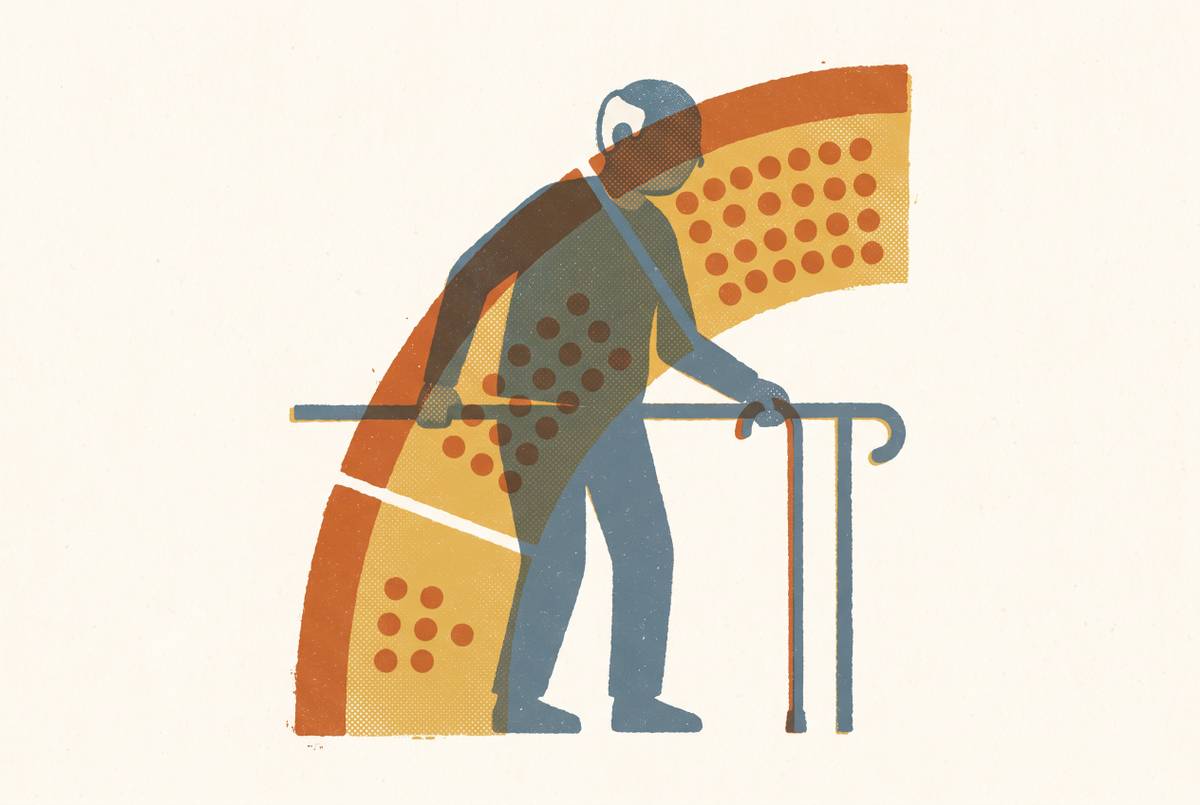
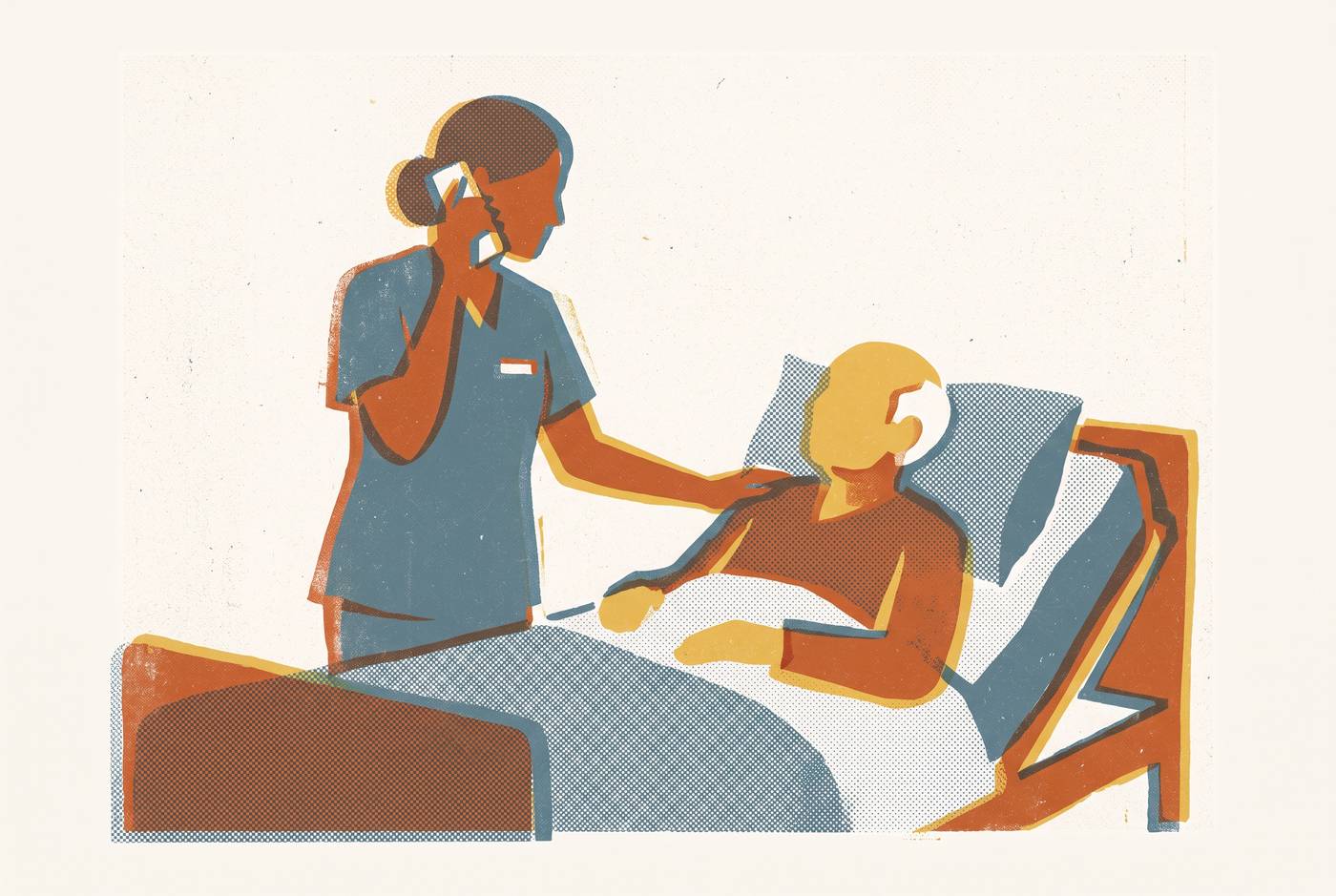
SBAR functions differently in a nursing home than it does in a hospital because of distance, time, and the resident's capacity to speak for themselves. A resident who cannot self-advocate, whether from dementia, acute illness, or baseline frailty, leaves the nurse's account as the only account the physician will ever receive about what happened. There is no bedside attending down the hall to confirm or correct the story; there is a phone call, often placed at 2 a.m., to a physician who has not seen the resident in person and will make a decision based entirely on how the information is delivered.
The conditions that drive most LTC escalations compound this problem because they rarely announce themselves. UTIs, congestive heart failure, dehydration, and behavioral shifts tend to progress quietly, and the window between "something is off" and an emergency transfer can close fast enough that a nurse who hesitates, or who is unsure how to frame what she is observing, loses the chance to intervene early. Research into SBAR feasibility in long-term care has confirmed what frontline staff already know from experience: poor nurse-physician communication in the nursing home setting damages resident care outcomes and degrades the working environment for both the nurses making the calls and the physicians receiving them.
Adding to the structural difficulty is who actually makes these calls. A category of frontline nursing staff with less formal clinical training than a fully licensed nurse, rather than that more highly trained nurse, are disproportionately the frontline escalators in long-term care nursing homes. They are the staff placing calls to off-site physicians to manage new or unexpected symptoms, often with less formal training in clinical assessment than an RN and without another licensed nurse physically present to consult before dialing. That staffing reality, combined with the remote and time-compressed nature of the physician relationship, means the structure of the call itself becomes the primary clinical instrument available in the moment. Nothing else in the process substitutes for it.
What SBAR actually requires a nurse to do before the call begins
A well-formed SBAR call depends entirely on work done before the phone is picked up. It is an act of synthesis, not recitation: the nurse has to assemble, organize, and prioritize information from the chart before saying a single word to the physician on the other end of the line. A nurse who starts dialing before doing that work is improvising a clinical presentation in real time, and improvisation under time pressure is where most of the damage happens.
AHRQ's long-term care communication module lays out what the Background component has to contain: brief medical history, health care already provided, medications, allergies, vital signs, lab results, and advance directive or code status. That is a substantial data load, and it has to be pulled from the EHR quickly, under pressure, often while a resident's condition is actively changing. The same module is explicit about sequence: review the chart before calling, complete every section of the SBAR before communicating it, and document the SBAR in the progress notes once the call concludes. Each instruction exists because skipping it produces a specific, predictable failure: calling before reviewing the chart means guessing at history; speaking before completing every section means leaving the physician with gaps; skipping the post-call documentation means the clinical record never reflects what was actually discussed and decided.
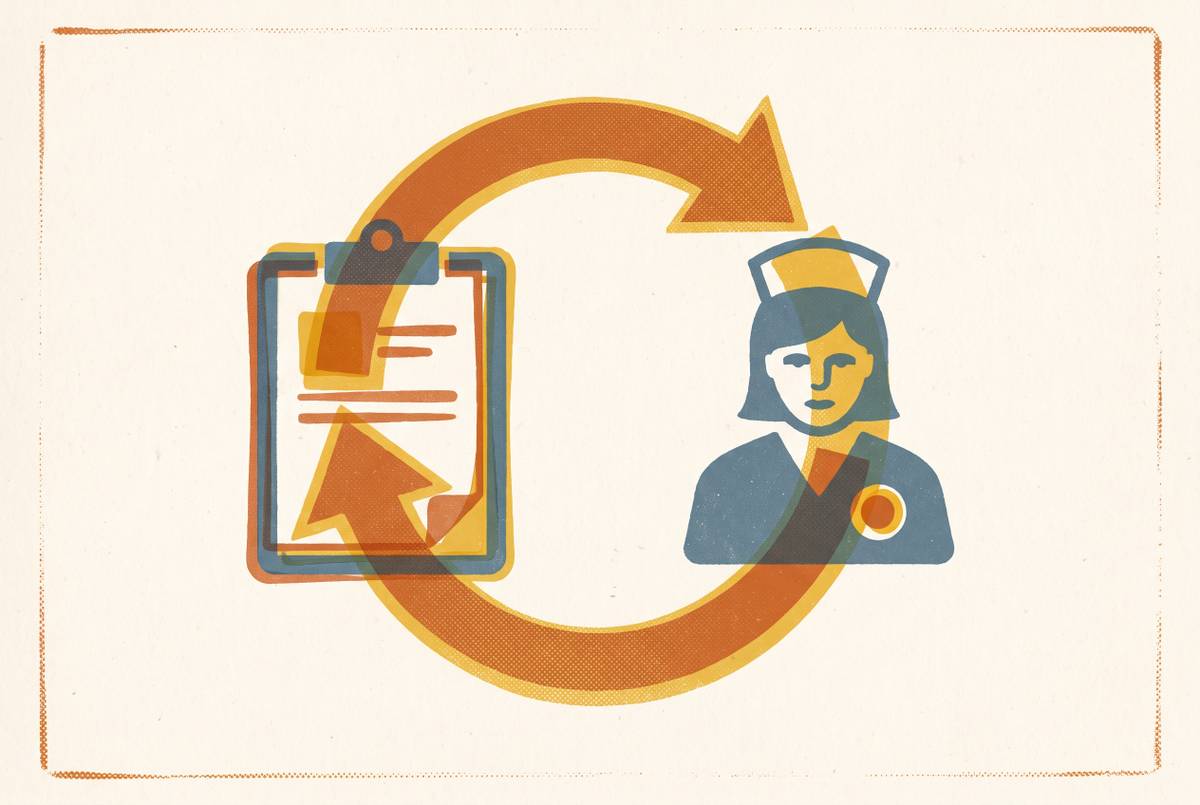
The depth of that synthesis changes depending on who is making the call. A nursing assistant's SBAR and a licensed nurse's SBAR are not separated merely by seniority; they are separated by the depth of assessment each is expected to deliver. A nursing assistant reports what she noticed. A licensed nurse, RN or LVN, delivers a clinical interpretation of what was noticed and recommends what should happen next. SBAR in long-term care operates as a chain across these tiers: nursing assistants use it to escalate to licensed nurses, and licensed nurses use it to escalate to physicians, with each tier expected to synthesize more than the one below it. Understanding that chain matters because a call that fails often fails at the point where a nurse has not done the synthesis her tier requires, not because she lacks the words to describe what she saw.
The two sequencing failures that make most escalation calls harder to act on
Most SBAR breakdowns in long-term care are not failures of knowledge. The nurse usually knows the resident, knows the history, and has a legitimate concern. What breaks down is sequencing: the physician on the other end of the call cannot act on information that arrives in the wrong order or that never arrives with a clear request attached.
The first failure is extended history before the concern. A teaching example built around this failure shows a nurse opening a call with the resident's long-term conditions, their living situation with a relative, the teams who saw them the day before, and recent test results, only arriving at "I am calling because things do not seem right" after all of that. The physician has been listening for a minute or more without knowing why the phone rang. The fix is not telling the nurse to say less; it is telling her to reorder what she says. State the deterioration and the needed response first, then supply the supporting detail behind it. An improved version of that same call opens differently: "I am calling about a new deterioration and need an urgent review. I am the nurse currently with the patient on the ward. Their breathing and level of interaction have changed from the earlier assessment." The task is established in the first sentence, and the history follows it.
The second failure is a concern offered without an assessment behind it. A call that ends with "I'm worried, could someone come?" may be a reasonable first alarm when something is urgently wrong, but the conversation that follows needs more structure than that. An improved version demonstrates how to communicate uncertainty without abandoning the concern: "They are less alert than when I spoke with them earlier. I have not established the cause. I am concerned about the change, and I need you to assess them. The current observation record is available; I will describe the findings and what is different from baseline." That framing does not require the nurse to name a diagnosis before escalating, and it should not. It requires her to describe what changed, acknowledge what she does not know, and ask for what she needs.
A third variant of the same underlying problem is information offered without a request attached. Ending a call with "I thought you should know" leaves the next step unresolved, because neither party has agreed on who does what next. The Recommendation component exists specifically to close that gap, making the required response explicit enough that both sides agree on the next action before hanging up.
Building Each SBAR Component for a Typical LTC Escalation
Each of the four SBAR components has a distinct job in a nurse-to-physician call, and producing a usable message depends on understanding that job rather than treating the component as a label to fill in.
The Situation component is a commitment. The nurse identifies herself, the facility, and the resident by name and room, then states the problem in one or two sentences. AHRQ's guidance is specific on this point: be brief and concise, give a physical assessment report, and make sure the receiver understands why the call is happening before anything else is said. That opening sets the register of urgency the physician applies to everything that follows it.
The Background component carries the data load described earlier: brief medical history relevant to the current concern, health care already provided, medications, allergies, vital signs, lab results, and advance directive or code status. For a nursing assistant escalating to a licensed nurse, background means something simpler: how the resident was before the change, eating normally, usually talkative. In either case, the nurse should state where the information comes from, whether the resident, a relative, a colleague, or the chart, and should say when something is unknown. Guessing turns a gap in communication into false clinical information sitting in the record.
The Assessment component is where the licensed nurse's training is expected to show. AHRQ instructs nurses to share the results of clinical assessment, including severity and whether the condition is life-threatening. A licensed nurse may assess directly: "I think she may have had a stroke," or "Her INR is well above therapeutic range." A nursing assistant, without that clinical training, communicates uncertainty instead: "I think you might want to evaluate her," or "I don't know what this means but hope you will take a look."
The Recommendation component states what the nurse needs and the timeframe for it, not to dictate the physician's clinical decision but to make the required response concrete enough that both parties can agree on next steps. AHRQ offers two working examples: "Shall I take a voice order for some vitamin K right away?" and "I'm hoping you will come and see her as soon as possible." The call does not end when the recommendation is spoken. It ends when the loop is closed, when the nurse confirms the agreed action and who owns it, and when she asks the physician to repeat back the observed change and the request. If what comes back is only "the nurse was worried," the message has to be revised and repeated. A completed SBAR form only records that the call happened; if the physician's response does not address the concern, the nurse's job is to say so and follow the facility's escalation route.
LTC-Specific Conditions That Most Commonly Trigger an Escalation Call
The changes that trigger an escalation call in long-term care fall into predictable categories, and knowing what each one requires in advance cuts preparation time and reduces the odds of a sequencing error during the call itself.
AHRQ's LTC module groups the physical changes nurses are expected to watch for and escalate: changes in gait or walking, changes in bowel and urination patterns, skin condition, level of weakness, falls, and vital signs. Alongside these sit non-physical changes: demeanor, appetite, sleep, speech, confusion or agitation, and complaints of pain. Each category shifts what the Background component needs to contain. A fall requires incident detail and the resident's current anticoagulation status, since a fall on blood thinners carries a materially different risk profile than one without. A skin change requires wound history and whatever interventions have already been tried. A behavioral change requires a clear statement of the resident's baseline demeanor alongside current medications, since a new behavior only means something in contrast to what is normal for that resident.
AHRQ's own example of a nursing assistant escalating a behavioral change to a licensed nurse shows this pattern in practice: "Ms. C fell asleep in her clothes this evening and cursed at me. She is the 85-year-old from room C6; she is usually pretty friendly and does her own ADLs. She seems OK physically, but the nursing assistant is worried. I'd feel better if you would take a look at her and make an assessment." The call states the behavior, anchors it against baseline, and asks for a specific response, all without requiring the nursing assistant to diagnose anything.
A subtler category, systemic changes such as early UTI or dehydration, follows the same logic even though the presenting signs are less dramatic than a fall. A resident who is slightly more confused or slightly less interested in food may be in the early stage of exactly the kind of deterioration that becomes an emergency transfer within a day if it goes unescalated. The Background component for these cases leans on recent intake, recent lab values if available, and any change from the resident's documented baseline.
When a concern is raised through SBAR and still is not being heard, AHRQ's CUS tool provides an escalation path beyond the standard framework: "I am Concerned... I am Uncomfortable... I believe the Safety of the resident is at risk." That language is reserved for situations that are genuinely urgent and where ordinary communication has stopped working, not for routine calls.
The Structural Problem With SBAR and LVNs
This category of frontline nursing staff makes most of the nurse-to-physician calls in long-term care nursing homes, and research has documented that they face specific, persistent difficulty using standardized communication forms like SBAR, a gap that standard SBAR training on its own does not close. The gap is not a matter of effort or motivation. SBAR's Assessment component asks the caller to form an independent clinical impression and recommend a next step, a task built around the scope of practice and training pathway of a fully licensed nurse.
Research from Texas Tech University Health Sciences Center traced this difficulty directly to the creation of an alternative tool that does not require high levels of RN supervision to use. That tool, the Algorithm-Guided Assessment Support Tool, known as AGAST, was tested in a simulated clinical scenario involving a nursing home resident with Alzheimer's disease experiencing a urinary tract infection. Rather than asking the LVN to synthesize an open-ended clinical assessment from scratch, AGAST walked the nurse through sequenced question-and-answer choices designed to surface the information relevant to describing a change in condition. Ashcraft et al.'s research, published in Innovation in Aging, found that 90% of participating LVNs rated AGAST as easy or very easy to use, with a mean completion time that was brief.
Care decisions that follow a physician-LVN conversation directly shape the quality of care a resident receives, and because residents with Alzheimer's disease are among the least able to self-report what is wrong with them, the entire weight of the clinical picture rests on how well the LVN's call conveys it. The lesson for nursing managers is that SBAR adoption has to be designed around the staff actually making the calls rather than assumed to transfer uniformly across license levels, since the framework that works cleanly for an RN in an acute unit does not automatically work the same way for the LVN placing a 2 a.m. call from a nursing home floor.
SBAR Documentation, Survey Citations, and CMS Compliance Exposure
Every escalated concern that gets documented through SBAR becomes part of the evidentiary record that surveyors examine, which makes documentation quality a direct compliance variable rather than a secondary administrative task attached to the clinical work.
CMS requires that clinical records show assessments, care plans, interventions, and outcomes clearly linked to one another and entered in a timely fashion. SBAR documentation entered into the progress notes is the front door into that chain: if the record cannot show that a change in condition was identified, communicated, and acted on in sequence, the chain CMS is looking for does not exist on paper even if it existed in practice. F641, Accuracy of the Minimum Data Set, remains one of the most frequently cited F-Tags during state surveys, and incomplete or delayed clinical documentation at the nurse level is a direct upstream cause of those citations. AHRQ's LTC module instructs nurses to document the SBAR in the progress notes for exactly this reason: the call record functions as a clinical record, and what gets written down after the phone is hung up carries as much weight, in the eyes of a surveyor, as the call itself.
Sources
- Examining the feasibility and utility of an SBAR protocol in long-term care
- Module 2: Communicating Change in a Resident's Condition
- LONG TERM CARE FEASIBILITY OF NURSING HOME LVNS USING AN ALGORITHM-GUIDED ASSESSMENT SUPPORT TOOL
- Examining the feasibility and utility of an SBAR protocol in long-term care - ScienceDirect
- Successfully initiating an escalation of care in acute ward settings—A qualitative observational study