Closing the Feedback Loop Between Incident Reports and Floor Nurses
Nurses stop reporting safety problems when their reports vanish into silence.
A nurse finishes a shift, fills out an incident report on a resident who fell or a medication that went to the wrong person, submits it, and moves on to the next task. In most long-term care facilities, that is the last she hears of it. Nurses file most incident reports in these settings, but the system built around those reports routes information up to managers and risk committees, with no path back down to the person who wrote the original account. Research summarized by Nuckols in AHRQ PSNet (2011) found that nurses file up to roughly four in five incident reports, while physicians file only a small share, so the reporting burden in long-term care falls almost entirely on nursing staff who rarely see what their reports produce.
This imbalance does more than create an administrative blind spot. Nurses themselves name doubt about whether their reports lead to any real safety improvement as a reason they stop filing them, which turns the silence into a loop of its own: fewer responses produce fewer reports, and fewer reports produce less reason to respond. Researchers call the final phase of the reporting process, updating the original reporter and alerting the providers involved, the "black hole" dynamic, naming it as the step most likely to be skipped.
None of this traces back to indifference on anyone's part. The workflow itself was built to move information in one direction. The structure does not require anyone in that chain to carry the outcome back to the nurse who wrote the report.
Closing the Loop
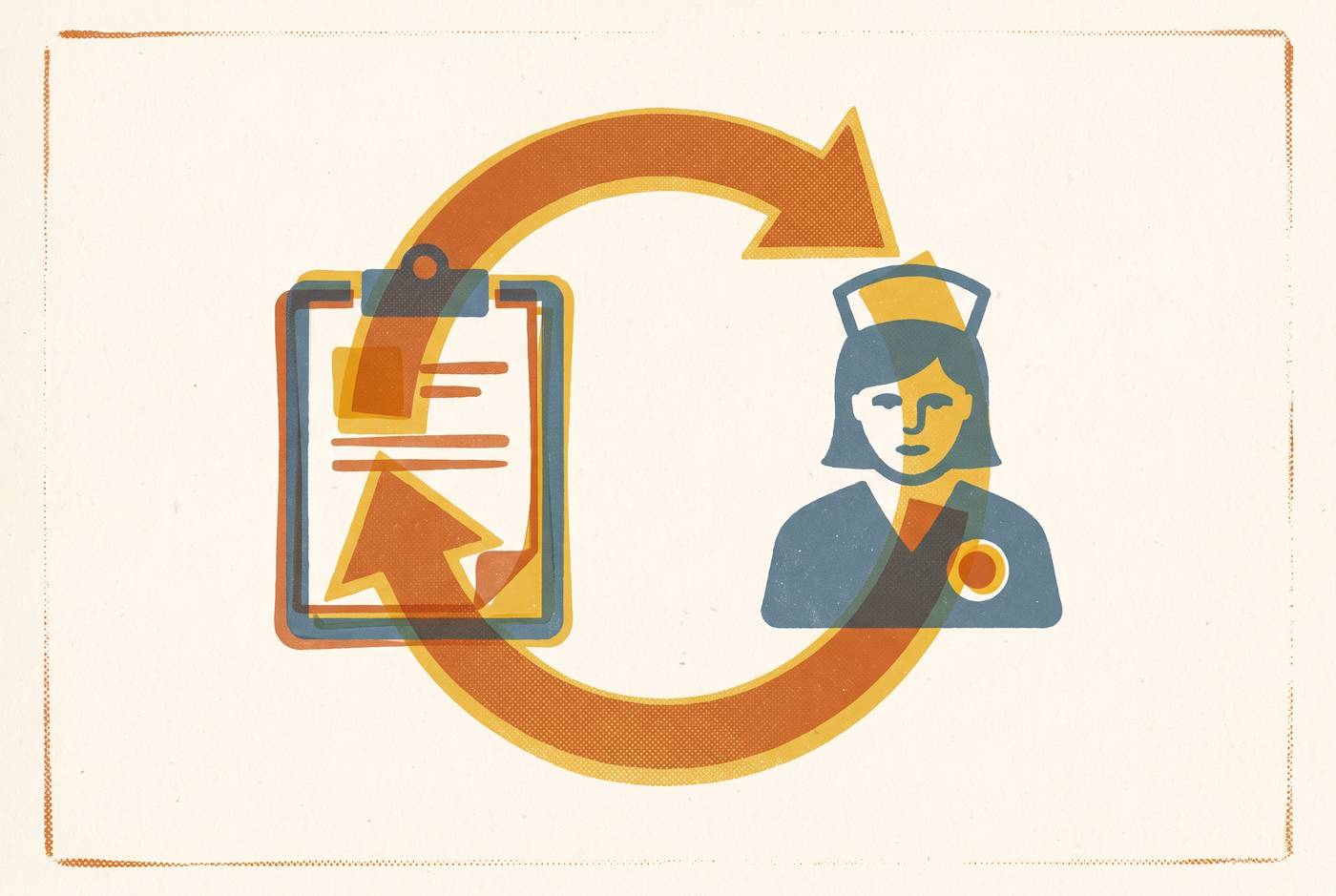
Closing the loop takes more than a message that tells a nurse her report arrived. The SAFE Loop model, led by Seferian and colleagues (medRxiv), lays out a complete process with six distinct stages: gather nurse input on safety problems, let each unit pick a specific Target Event to focus on, train nurses to write more detailed and useful reports about that event, run a defined reporting period focused on it, standardize how the resulting reports get investigated, and then return the findings to the nurses who filed them.
Most facilities handle the first four stages reasonably well. The breakdown happens at the fifth and sixth stages: investigations get standardized unevenly or not at all, and whatever findings do emerge rarely make it back to the nurses who generated the data that drove the investigation. The loop stops exactly where it matters most.
That final stage carries more weight than paperwork. It is the mechanism by which a nurse learns whether her read on a situation, a change in a resident's gait, a pattern in call-light frequency, a hunch about a medication interaction, turned out to be correct. Without that confirmation, she has no way to calibrate her own judgment against outcomes, the facility loses the chance to reinforce the behavior that led to a useful report, and closing the loop is a designed process with a defined output whose last step, if skipped, undoes the value of the first five.
How a broken loop distorts the incident data a facility captures
The consequences of a broken loop go well past staff morale. When nurses stop expecting any response to their reports, they do not stop filing uniformly across all categories of events. They stop filing the reports that matter most, the ones describing high-acuity, high-complexity situations where the outcome is genuinely uncertain and the nurse has the most to lose by being wrong. Fear of a punitive response and doubt about whether anything will change are well-documented barriers to reporting, and both weigh hardest when an event is ambiguous and high-stakes.
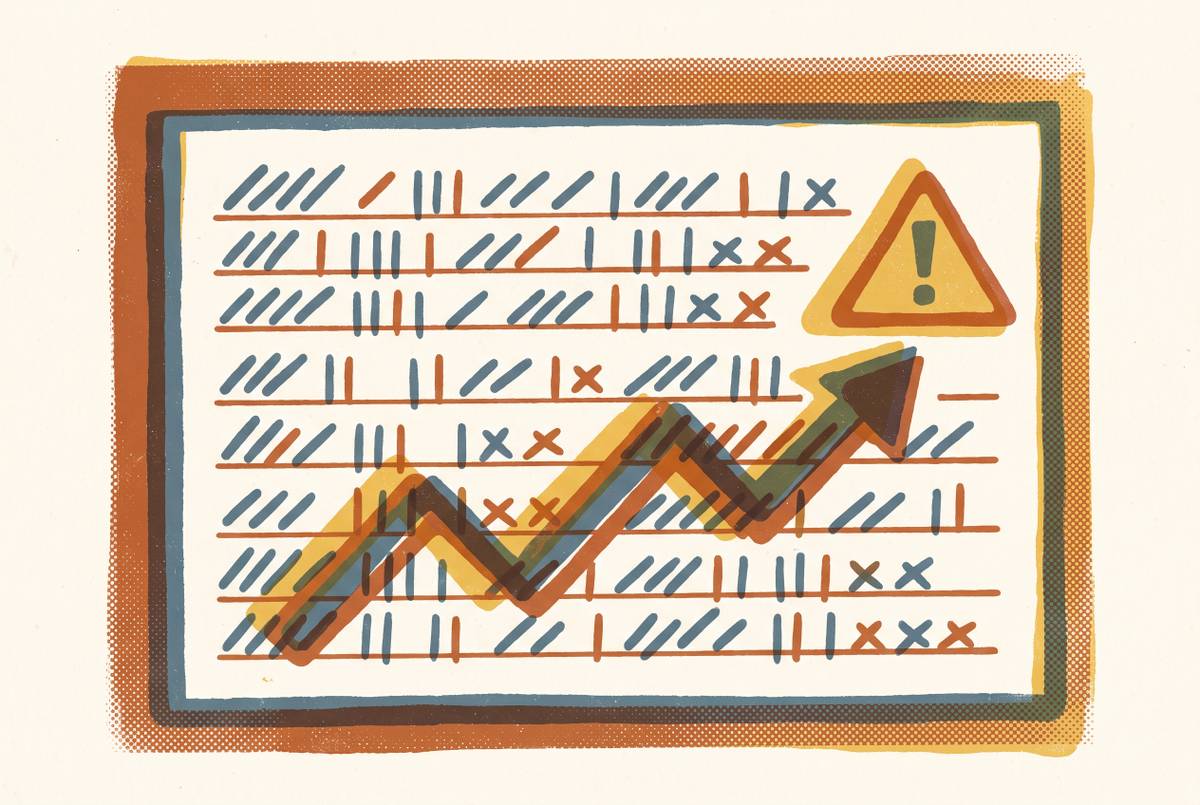
A ten-year retrospective study of nurse-submitted reports at an Italian teaching hospital, covering July 2015 through June 2025, found that the most commonly reported categories were aggression and violence and falls, and that 48.6% of all reports described no harm to the resident. If you read it against what is known about underreporting of severe events, this distribution shows an incident log that fills up with minor, well-documented occurrences while the more serious, harder-to-call events quietly go unrecorded.
That skew leaves a facility's incident record looking safer than the actual resident population is. Nuckols argued that incident reporting systems should prioritize capturing the events that matter most and should make sure those reports carry information useful for improving safety, rather than simply chasing a higher volume of reports overall. This argument matters even more in long-term care, where resident acuity runs high and staffing runs lean, because a facility cannot risk-stratify its population accurately if the data feeding that stratification excludes its most serious cases.
Nurse managers, the loop's most fragile link
Nurse managers sit at the only point in the organization positioned to carry feedback from an investigation back to the floor. They receive the findings, they are responsible for coaching their teams based on what those findings show, and they are closer to floor nurses, physically and organizationally, than anyone else in the quality or risk apparatus. The design of the loop depends on them.
That same position makes them its weakest point. A national survey conducted by Laudio Insights and Vizient, published in Nurse Leader and drawing on data from a national nursing leadership association, found that incident reports, injuries, and complaints rank among nurse managers' top sources of frustration on the job. These are the very materials a manager is supposed to turn into useful feedback for her team, and the volume of them drains her time and patience the fastest.
Administrative burden counts as one of the largest drivers of nurse manager burnout, and when a manager's day fills up with manual follow-up, scheduling, and coordination, something has to give. Any serious fix to the feedback loop has to give nurse managers a structured mechanism for this step, rather than asking them to find time for it on top of everything else they already carry.
What the regulatory environment requires from the feedback loop
The gap between filing a report and acting on it used to be an internal matter, something a facility could manage at its own pace without much external consequence. That is no longer true. Surveyors reviewing incidents now look across every category, falls, medication errors, elopement, skin breakdown, for a consistent thread: did the facility follow through with notification, monitoring, intervention, and care planning after the report came in? A facility that cannot show that follow-through risks a citation regardless of how well-documented the initial incident was.
The regulatory stakes rose further with a federal health agency's announcement that its Risk-Based Survey (RBS) process will roll out nationwide for qualifying nursing homes starting September 8, 2026. Under RBS, complaints and facility-reported incidents can cause a facility to lose its standing after appearing on a quarterly list, which makes the quality of an incident report and the documentation of what happened afterward a direct factor in how often a facility gets surveyed.
That shift matters more because of how thin current survey coverage already is. CMS compliance data shows that, as of mid-August 2026, a significant share of active providers nationwide had already gone past the 15-month survey ceiling without being surveyed. Financial penalties tell a parallel story: facilities that fail to meet quality reporting data thresholds face a payment penalty, and the number of nursing homes hit with that penalty jumped from under 300 in fiscal 2024 to over 2,000 in fiscal 2026. None of this reflects carelessness on the part of individual facilities so much as a compliance environment that has tightened quickly, turning what was once an informal gap in communication into a formal and measurable liability.
A deliberately designed feedback loop in practice
Closing the loop takes a redesigned process, not a memo asking staff to communicate better or a poster in the break room about speaking up. The SAFE Loop, developed and piloted by a team spanning Cedars-Sinai Medical Center, Johns Hopkins Hospital, RAND Corporation, and ECRI/Institute for Safe Medication Practices, offers the most complete model currently available. It works by selecting a single Target Event, training nurses to write more detailed reports specifically about that event, running a defined reporting period, standardizing the investigation that follows, and closing the cycle by telling nurses explicitly what contributed to the event and what the facility plans to do about it.
Three principles drawn from this evidence and the broader reporting research apply directly to long-term care, but the SAFE Loop itself was built and tested in a hospital setting, so it would need adaptation for a nursing home's staffing patterns and resident population. Facilities should focus feedback on priority event categories, such as falls, medication errors, skin wounds, and behavioral changes, rather than trying to close the loop on every single report that comes in. Feedback only holds credibility when the investigation behind it follows a consistent, standardized process, because nurses can spot an ad hoc review and they will discount its findings right away. And feedback needs an explicit channel back to the floor, whether that takes the form of a shift huddle, a posted summary, or a direct conversation, rather than being left to diffuse informally and inconsistently.
The interface nurses use to file a report in the first place also shapes how well any of this works.
The feedback already present in unstructured clinical notes
Much of the clinical detail that a feedback loop depends on already exists in nursing documentation. It just isn't sitting in the structured fields of an incident report. A large share of the clinically important information inside an EHR lives in free text, in nursing assessments, progress notes, and shift summaries that nurses write every day as a routine part of their work on the floor. None of this requires a nurse to document the same event twice. It requires tools capable of reading what she has already written and pulling out the signal.
That capability already exists in a tested form. A validated natural language processing algorithm applied to nursing home and home health EHRs extracted cognitive scores from unstructured clinician notes with high accuracy for both the MoCA and MMSE measures, and those extracted scores correlated well with the CMS-mandated MDS assessments covering the same residents. So language nurses write in the normal course of charting can turn into structured, usable risk data, and you add no additional field to fill out.
The same principle extends naturally to the categories that drive both resident risk and regulatory exposure: falls, behavioral changes, skin wounds, hydration status. Trends in each of these can be identified directly from documentation that already exists, rather than waiting for a formal incident report to accumulate enough volume to be noticed. That changes what the feedback loop can look like in practice. So instead of a manager reading through a stack of incident reports by hand and then scheduling time to discuss them, a system built to read existing clinical notes can identify a trend in those notes, flag the specific residents whose condition is shifting, and hand the manager something concrete and current to bring back to her team.
From reactive reporting to continuous risk visibility on the floor
Closing the feedback loop changes what floor nurses receive in return for the documentation they already produce every shift, turning it from a one-way submission into a continuous source of prioritized information about which residents need attention now.
Traditional incident reporting is built to look backward. It records what already happened, and at best it prompts a policy change meant to stop the same thing from happening again. A loop built around existing clinical documentation works differently: it can identify risk in nursing documentation before an event crosses the threshold of something reportable. Each of these is easy to miss on its own on a busy floor, especially when nurses are moving fast between residents.
Reading across multiple signals at once changes what becomes visible. Activity levels, sleep patterns, documentation notes, and vital sign trends, considered together rather than one at a time, and compared against patterns seen in residents who later did decline, make it possible to recognize a resident's trajectory shifting before it turns into an incident. So a care team can move from reacting to events after they occur to spotting residents at elevated risk early enough in their stay to act, including residents at higher risk of hospitalization, and real-time visibility into emergency department visits and admissions strengthens coordination across the care team.
For a nurse manager, this changes the substance of the conversation she has with her team. Instead of reviewing what went wrong after an incident, she can walk into a shift handoff with a ranked list of residents whose condition needs attention that day, so the handoff becomes a prioritized clinical assignment, not a rote transfer of tasks. For compliance, the same continuous documentation builds the evidence trail that QAPI requires, performance improvement projects with measurable outcomes, documented committee discussion, identified trends, without placing a separate reporting burden on top of the clinical work nurses are already doing.
Closing the feedback loop and building continuous risk visibility turn out to be the same undertaking; they just start from two different places. One starts with what nurses file. The other starts with what nurses write. Both arrive at the same outcome: a nurse who used to submit a report and hear nothing now sees her own documentation reflected back as a specific, ranked list of residents who need her attention today.
Sources
- Insights from critical care nurses: role of leadership coaching in enhancing incident reporting culture: a cross-sectional study - PMC
- Nurse-Reported Patient Safety Incidents in an Italian Teaching Hospital: A 10-Year Retrospective Study of Trends, Contributory Factors, and Implications for Nursing Practice - PubMed
- The Safety Action Feedback and Engagement (SAFE) Loop: Initial Testing and Refinement of a Novel Intervention to Enhance Hospital Incident Reporting and Patient Safety - PMC
- The Safety Action Feedback and Engagement (SAFE) Loop: Initial Testing and Refinement of a Novel Intervention to Enhance Hospital Incident Reporting and Patient Safety
- Incident Reporting: More Attention to the Safety Action Feedback Loop, Please
- Nurses' roles in patient safety incident reporting in hospitals: A scoping review - ScienceDirect
- LTCCC Alert: New Nursing Home Data Reveal Staffing Shortfalls and Persistent Quality Concerns - NursingHome411
- Nurse and Other Healthcare Managers' Experiences and Recommendations for Patient Incident Reporting Processes and Real‐Time Software Development: A Qualitative Study - PMC