Continuous Compliance Monitoring vs. Pre-Survey Scramble in Skilled Nursing
Daily documentation now determines survey frequency, public ratings, and payment all at once.
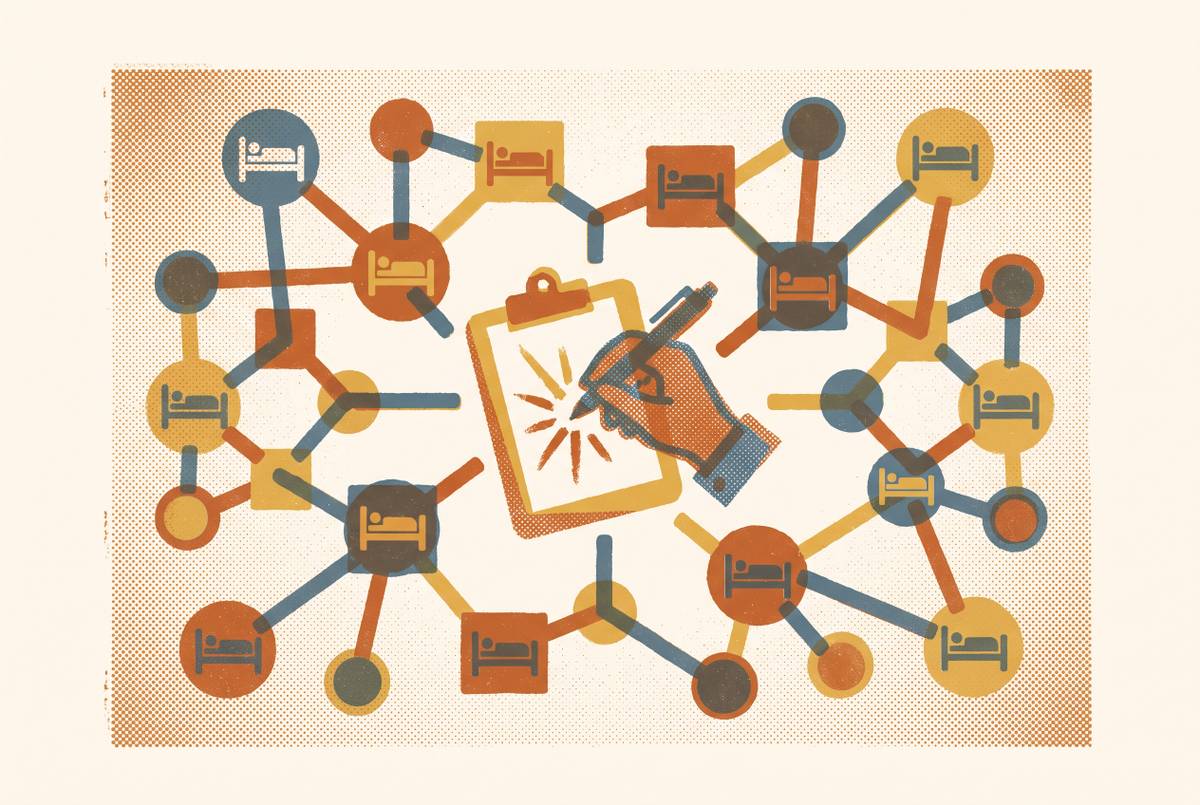
Continuous compliance monitoring in skilled nursing is no longer simply an alternative to the pre-survey scramble. The 2026 CMS regulatory environment makes it a structural necessity, because the documentation produced each day now shapes survey frequency, public standing, and payment at the same time. Readiness depends on finding gaps in that living record.
How the 2026 CMS regulatory architecture turned daily documentation into a continuous compliance verdict
CMS established the Risk-Based Survey system under QSO-26-14-NH, effective July 16, 2026, with nationwide implementation beginning September 8, 2026. The High Performing Facility designation follows on October 8, 2026, with a visible icon on Nursing Home Care Compare for facilities that qualify. Earlier, CMS released Admin Info: 26-06-NH on May 15, 2026, directing data-driven selection for Federal Monitoring Surveys. These actions form one interlocking oversight system. The documentation record supports access to a lighter survey, a public performance signal, and decisions about additional federal scrutiny.
The Risk-Based Survey pathway rewards facilities that can demonstrate continuous compliance with a faster, lighter recertification process. The designation shows families comparing homes which ones qualify, while federal monitoring uses risk indicators to decide where to focus oversight. Selection priorities include data indicating risk of noncompliance, a history of noncompliance, allegations of noncompliance, CMS Location specific concerns, media attention, or other justifications. Weaknesses can affect both the survey pathway available to a facility and its exposure to further review.
Payment also depends on the record through quality reporting and disclosures tied to reimbursement, with no need for a separate documentation exercise. When a record does not back up reported performance, the risks can go beyond the immediate citation. Complaint surveys can arrive any day between recertification cycles, so a facility cannot plan to be ready only during a set inspection window. Preparation shortly before a standard survey cannot substitute for evidence that supports operations throughout the interval.
Why only a fraction of facilities can qualify for the lighter survey track, and what that means for the rest
CMS estimates that approximately 12% of nursing homes nationwide currently qualify for the RBS pathway. Most homes therefore face slower recertification and more scrutiny. To qualify, a facility needs a five-star overall rating and at least a three-star staffing rating. It also requires no citation for actual harm, immediate jeopardy, or substandard quality of care in the last survey cycle, and no failed Payroll-Based Journal staffing data audits or MDS resident assessment audits. A strong overall rating alone is not enough.
The eligibility screen also includes a constraint outside daily documentation quality. Going more than 18 months without a standard survey is disqualifying. The survey backlog the policy was designed to address may therefore exclude otherwise-eligible facilities. That creates a practical limit on the reward. A facility must be ready at all times, even if it cannot yet qualify for the lighter pathway. Meanwhile, the compliance data that prevents qualification can also increase the probability of selection for a Federal Monitoring Survey.
Staffing records make this overlap particularly consequential. CMS formally rescinded national numeric staffing minimums in December 2025, but retained oversight through facility assessment documentation, PBJ audit accuracy, and the defensibility of staffing decisions. PBJ discrepancies can therefore obstruct RBS qualification while also increasing federal monitoring exposure. The Center for Medicare Advocacy raises a separate concern, arguing that current federal performance data is believable for identifying the lowest-performing facilities and unreliable for identifying the highest. That objection limits what eligibility can establish about quality, but it does not remove the operational need for a defensible record.
Where F-tag citations actually originate — and why the problem lives in unstructured documentation, not care delivery
Care may be delivered correctly while its documentation creates citation risk. Much F-tag exposure begins in the gap between what nurses describe in narrative notes and what coded EHR fields record. The distinction is clinically and operationally important. A completed intervention and an adequately documented intervention are not interchangeable evidence, especially when the narrative and the corresponding assessment field disagree. MDS Validation Audits make that discrepancy concrete by exposing differences between the nurse’s account and the recorded MDS response.
CMS’s June 2026 data identifies citation exposure in F689, covering accident hazards and adequate supervision, and in tags covering respiratory and tracheostomy care and suctioning, and infection control. F689 findings are particularly serious. Nearly one in three involved actual harm or immediate jeopardy, the highest proportion of serious findings among the top-cited tags. Those findings also prevent a purely administrative reading of the problem. Documentation review must detect signs of unsafe care as well as failures to capture care that was provided.
Deficiency records repeatedly describe early detection failures, communication failures, failures to follow policy and procedure, inaccurate documentation, and delayed clinical responses. Those problems can leave traces in shift notes or progress notes while coded fields show nothing out of order. The large majority of EHR data is unstructured. Clinical notes, shift summaries, and patient narratives may hold the only account of a significant event, yet raw narrative text cannot be systematically reviewed at scale. Documentation compressed into the end of a tiring shift further widens the gap between care delivered and care recorded.
QAPI adds an obligation to organize and use this evidence. CMS requires an effective, comprehensive, data-driven program, and surveyors assess committee composition, meeting frequency, prioritization processes, corrective actions, and outcomes. The record must show both what happened in clinical care and how the facility dealt with weaknesses that kept coming back. When evidence is missing from coded fields but appears in unstructured documentation, monitoring must review that documentation as part of the evidence.
Why staffing compliance specifically now operates as a longitudinal documentation system, not a daily headcount
Staffing shows most clearly why compliance is now longitudinal. After repeal of the national numeric minimums, enforcement shifted toward whether actual staffing aligns with the clinical requirements stated in the facility’s own assessment. A facility must support the consistency of its staffing decisions over time, rather than rely on a daily count detached from resident needs. A short-term lapse can consequently expose months of historical operational data to scrutiny.
PBJ audits provide the enforcement mechanism for that comparison. A significant share of staffing-related deficiencies comes from discrepancies in submissions, differences in how contracted and employed staff are classified, repeated weekend and overnight RN gaps, and ongoing failures to meet facility-assessed acuity thresholds. Repeat deficiencies tied to resident harm or immediate jeopardy are increasingly triggering extended look-back periods and compounded enforcement measures. The documentation trail must therefore explain both what staffing was provided and how it aligned with assessed requirements.
For multi-state operators, that trail must satisfy several overlapping obligations. Each facility faces state statutory minimums, CMS facility assessment adequacy standards, surveyor interpretive enforcement guidance, and quality reporting and reimbursement-linked staffing disclosures. A staffing model that fits one jurisdiction may not safely fit another. OIG’s announced work plan adds another check on the records by looking at required medical director duties and whether PBJ-reported medical director hours are accurate and useful for oversight. This is another instance of the same principle, in which reported activity must support the responsibilities it is meant to represent.
What continuous compliance monitoring actually does — reading existing documentation to surface gaps before a surveyor does
Continuous compliance monitoring looks for what coded fields miss by reading documentation already in the EHR. Natural language processing scans shift summaries, progress notes, and patient narratives for care gaps, near misses, and quality deviations that coded fields miss. It works where the missing evidence originates. A clinically significant observation does not have to be translated manually into a structured flag before it can become visible to the monitoring process. This approach can find compliance gaps, signs of risk to residents, and care deviations without asking nurses to fill in another field.
That visibility also supports predictive risk stratification. Continuous analysis allows platforms to score residents by risk level, project health trends, and flag early signs of deterioration. Ocean Healthcare’s chief strategy officer and senior vice president of network development Joseph Kiernan described using AI-based tools to forecast potential health issues and prompt interventions. His examples included early signs of a congestive heart failure episode, missed treatments, and patterns detected before escalation, ultimately reducing hospital readmissions. These are clinical signals with compliance consequences. CMS tracks readmission rates in SNF quality scoring, and risk is highest in the 30-day period after hospital discharge, so keeping those risks in view matters for quality scores and RBS eligibility.
The technology’s role nevertheless depends on its position in the compliance stack. Clinical EHRs provide the source data for downstream work, but are not themselves the compliance engine. Document-compliance layers handle non-clinical F-tag evidence and the requirements of structured workflows, while clinical intelligence platforms read unstructured nursing notes, score resident risk, and find compliance gaps in real time. Buying one layer on the assumption that it covers all three leaves parts of the evidence record outside the facility’s monitoring approach.
Why this approach cannot ask nursing staff to do more — and what makes it operationally sustainable
The strongest operational objection is that another compliance tool can become another documentation obligation. In the current staffing environment, that objection is legitimate. A nurse who lacks time to complete the existing record will also lack time to populate a parallel compliance system. Requiring new entry therefore recreates the gap the tool is intended to close. Reading existing documentation is not simply a convenient design choice, but a structural condition of sustainable adoption.
Nurse managers have said they strongly prefer AI tools that start with low-risk tasks done in high volume before moving toward autonomous clinical judgment support. They also favor tools designed for nursing workflows. Routine review of an existing record addresses a substantial workload without making additional data entry the price of better oversight. It also keeps the initial use of automation focused on work that managers already need to perform.
Training remains necessary, but cannot bear the entire compliance burden. High turnover and knowledge gaps make a training-only approach unreliable, while monitoring existing notes reduces dependence on an individual nurse’s recall or completeness of training. It does not remove the need for sound documentation. Its operational value is that nursing managers can recover time otherwise spent manually reviewing charts and assembling compliance evidence. That capacity can return to direct care or support additional residents without adding headcount.
What facilities need to get right every day to stay survey-ready in this environment
The practical response is to make documentation review part of daily operations. Facilities should focus on the clinical domains where narrative-to-coded-field gaps create citation exposure, including falls, nutrition and hydration, infection control, assessment accuracy, and restraint use. The purpose is a record that consistently supports what care occurred, what risks were identified, and how the facility responded. That daily alignment supports both survey readiness and the audit accuracy required for RBS eligibility.
QAPI should turn those findings into documented improvement. Committee activity, prioritization, corrective action tracking, and measurable outcomes provide the structure for moving from an identified gap to a sustained process change. Detection alone does not complete that work. A data-driven program must preserve evidence of the facility’s response, so surveyors can assess not only the finding but also the action and outcome. This connects automated monitoring to an existing CMS obligation.
Emergency Preparedness and Life Safety Code desk audits under the federal monitoring guidance review Form CMS-2567, the accepted Plan of Correction, and evidence of compliance. Those records must remain current and well supported. Gaps can be visible to federal reviewers without an onsite visit, just as clinical and staffing records can direct scrutiny between recertification cycles. Facilities that make continuous documentation quality and automated gap detection daily practice are best positioned to qualify for the RBS pathway and remain on it.