Behavior Change Monitoring for Early Deterioration Detection in LTC Residents
Catching gradual decline before hospitals admit deteriorating residents.
Behavior change monitoring in long-term care detects deterioration through changes in appetite, sleep, mobility, and engagement before conventional assessments show clear decline. Its value depends on consistency. Personal baselines, continuous observation, and systematic analysis of existing documentation make early detection a facility-wide capability independent of individual staff familiarity.
Why behavioral drift precedes measurable decline in LTC residents
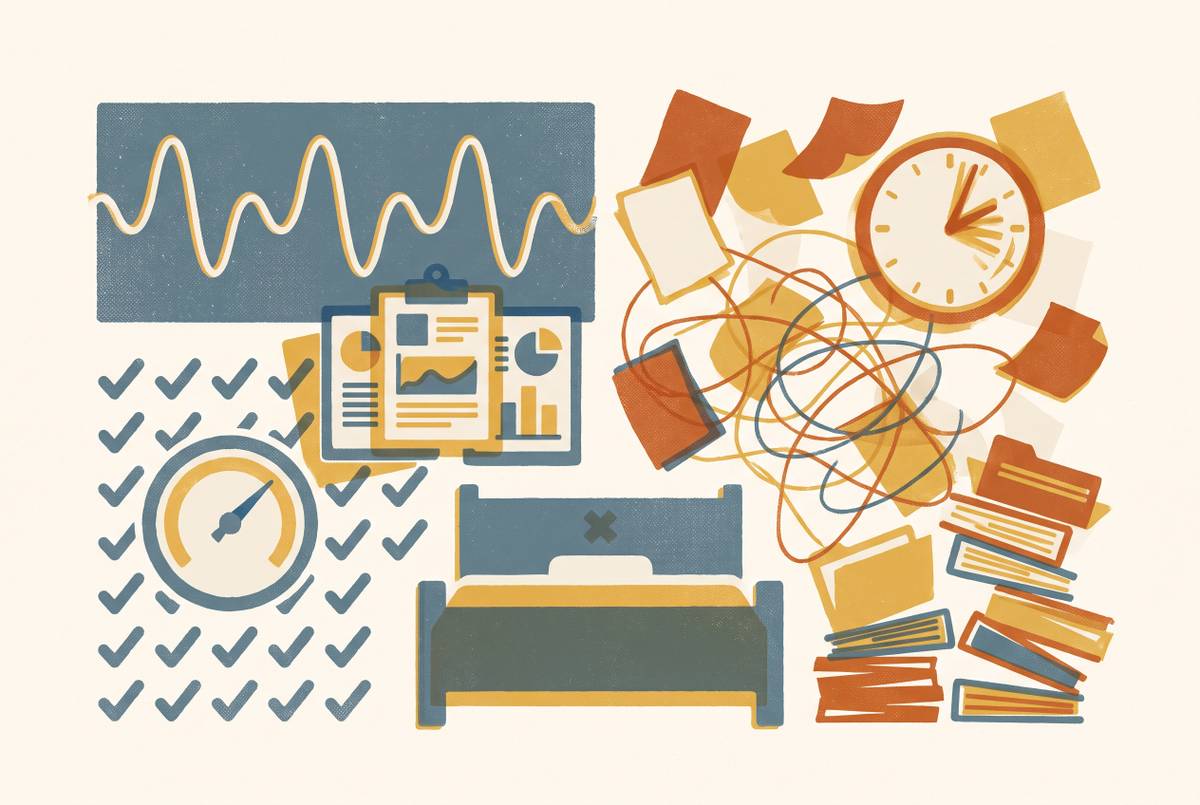
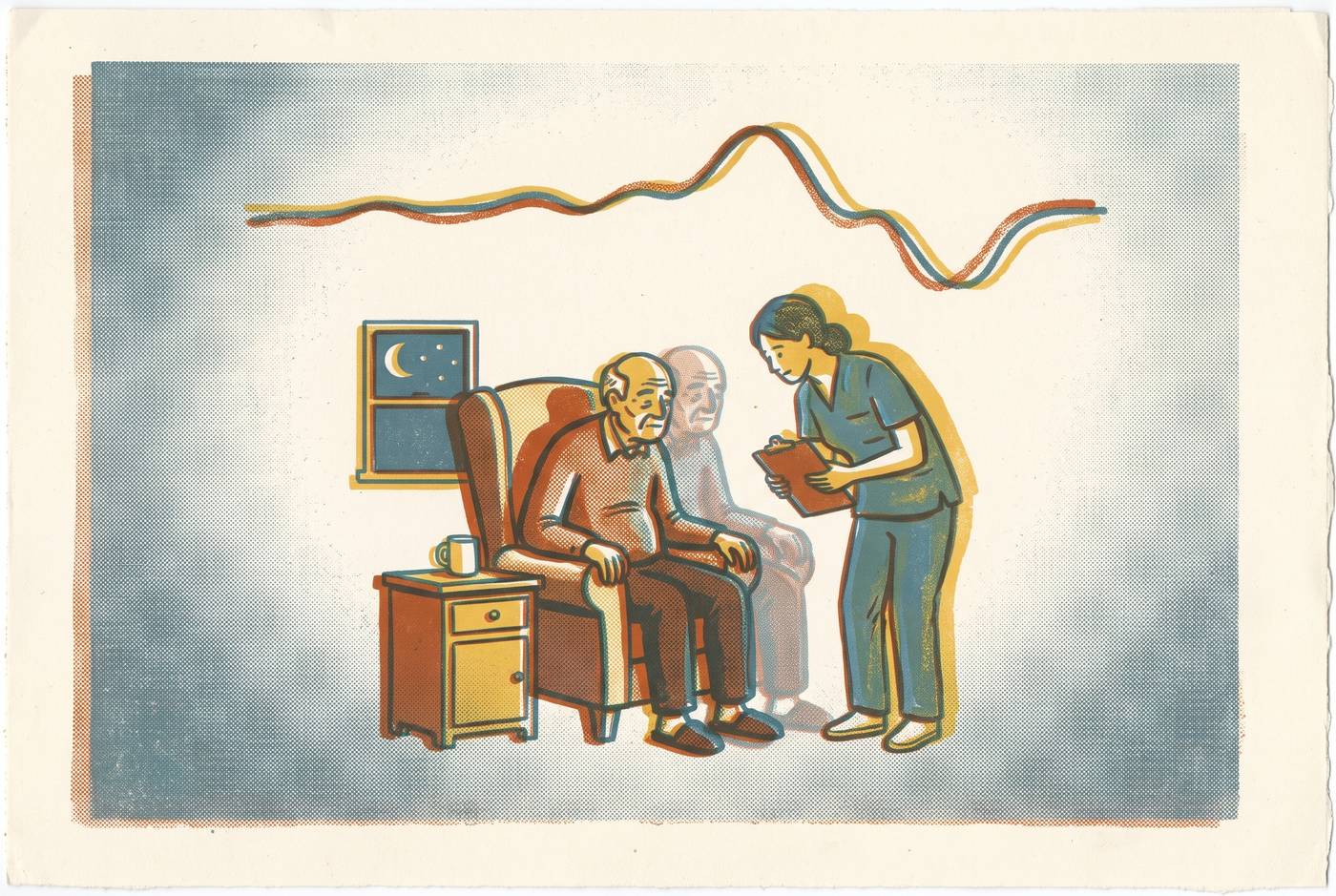
A resident eats less, sleeps more, and stops attending activities, but the pattern is recognized only when deterioration requires hospital transfer. This is the clinical sequence behavioral monitoring is designed to interrupt. Weakness, infection, cognitive decline, and dehydration can change how a person moves, eats, sleeps, and engages before temperature, blood pressure, or pulse shifts.
That interval creates an opportunity for clinical intervention. Reduced appetite or reluctance to mobilize may appear unremarkable during a single assessment, particularly when the change is gradual. Yet these changes can be signs of a developing illness before its effects are visible in a conventional vital-sign snapshot. Missing that window can allow deterioration to progress toward hospitalization or sepsis.
What the early-warning signal actually looks like across the key behavioral domains
Appetite and hydration changes can indicate infection, dehydration, medication side effects, or depression. Sleep disruption can precede confusion, cardiac events, or respiratory compromise. Neither domain identifies a diagnosis on its own. Their value lies in revealing a departure from the resident’s usual pattern, especially when changes occur together.
Gait alteration, less self-initiated movement, and increased time in bed can indicate weakness, pain, or neurological change. The University of Edinburgh’s simulated-weakness research found that non-dominant upper-body motion speed and scale, along with inactivity distribution, were among the behavioral features most sensitive to weakness. Because the research simulated weakness in healthy adults, it identifies promising features rather than establishing a universal LTC detection rule.
Reduced engagement, increased isolation, and new agitation or confusion can signal cognitive or mood changes. Hokkaido University’s sensor research defined six anomaly classes, namely being semi-bedridden, being housebound, forgetting, wandering, falls while walking, and falls while standing. Across domains, the pattern is more informative than any single change because ordinary day-to-day variation can otherwise obscure drift.
Why the manual detection model fails to catch drift consistently
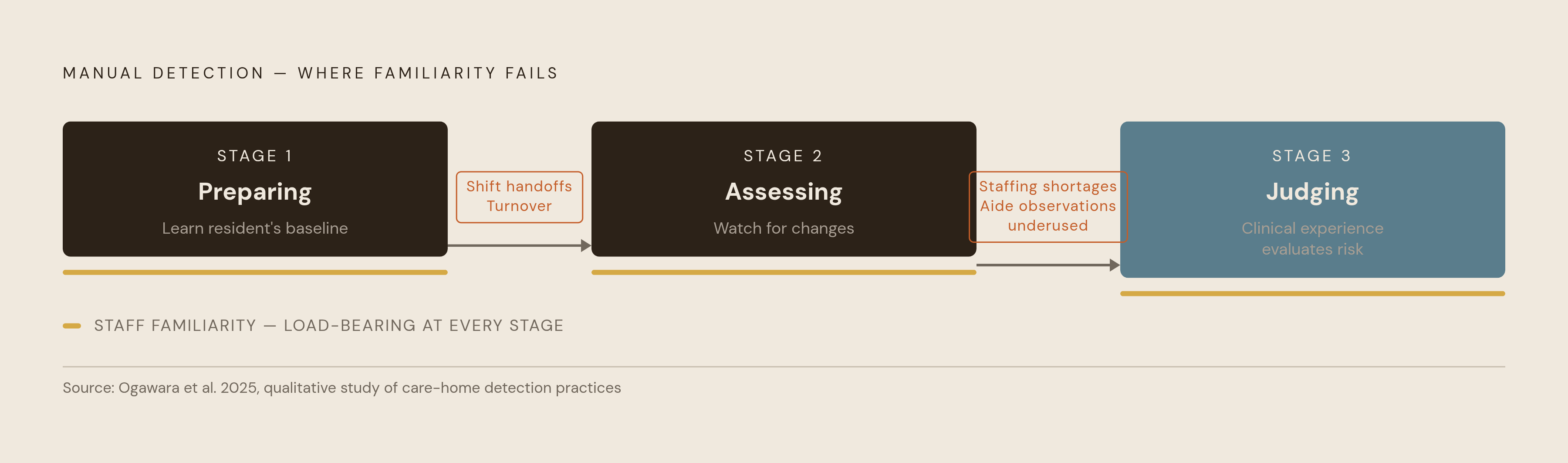
Ogawara et al.’s 2025 qualitative study of nurses at several LTC facilities described three stages of early detection, which were preparing, assessing, and judging. Nurses learned what was usual for residents, watched for changes, and drew on clinical experience to judge the risk. Familiarity supported every stage of the process. An experienced nurse who knows a resident well may recognize a subtle departure that a snapshot assessment cannot capture.
The difficulty is maintaining that familiarity across the facility. Shift handoffs and turnover mean that the nurse on duty when drift begins may not know the resident’s baseline. Rising acuity and staffing shortages also compress observation time. Care aides often have the most consistent daily contact, yet their observations remain underused in formal early-warning processes. The gap concerns system design.
Documentation does not automatically repair that gap. LTC EHR data can include sparse structured information, limited access to narrative notes, and substantial variation in documentation across residents and facilities. A change may therefore be observed without becoming part of a reliable longitudinal picture. The relevant test is not whether experienced nurses catch deterioration, but whether the monitoring process works across all residents, shifts, and days.
How continuous sensor and technology-based monitoring changes what is detectable
Continuous monitoring keeps watch beyond the time a nurse spends on an assessment. Ambient motion sensors, pressure sensors, wearables, and camera-based systems track different parts of how a resident moves and functions. Their central reference is the individual resident. Long sleep duration can be normal for a resident, while an increase that lasts beyond that resident’s usual sleep pattern may need attention.
Ascom’s Activity Monitoring solution combines sensors, cameras, and wearables with analytics to create individual resident profiles and alert assigned carers to behavioral deviations. It summarizes location and activity rhythms per shift, over the last week, and over the last month. Those views support care plan adjustment and multidisciplinary review. The Edinburgh research supports personalization as a design principle because personalized models outperformed generic feature sets, with no universal optimal feature set across participants.
Detection also depends on the timescale of change. The Hokkaido simulator-based system tuned classification to each anomaly’s duration, using seconds for falls and days for housebound status. It achieved sensitivity above 0.9 for the semi-bedridden, housebound, and forgetting categories.
Trilogy Health Services provides a clinical example of individualized monitoring. SVP and CNO Rhonda Dempsey described how high-risk residents wear a 24-hour chest monitor that alerts a nurse when their temperature stays two degrees above personal baseline for about an hour. She framed predictive analytics as a workflow and burden-reduction tool that can surface a warning before the resident is already septic. The nurse remains responsible for interpreting the alert.
Why unstructured clinical notes hold the behavioral signal that structured EHR fields miss
Sensors are not the only source of longitudinal evidence. Nursing notes already contain descriptions of mood, appetite, gait quality, engagement, sleep, and family reports of change. Structured fields record events such as when medication is given or a vital-sign measurement is taken. Narrative notes capture how the resident appeared and how the clinician understood the situation. Much of the behavioral signal is therefore present but difficult to retrieve systematically.
A 2025 study in Clinical Epidemiology developed an NLP algorithm to extract cognitive test scores from unstructured nursing home EHRs. It achieved near-perfect accuracy for MoCA extraction and perfect accuracy for MMSE. The demonstrated automation is limited to that defined extraction task. It nevertheless demonstrates that clinically useful information can be recovered reliably from nursing home free text.
A 2026 study in Nature Scientific Reports found that using structured and unstructured EMR data together made chronic disease detection much more accurate than using structured data alone. Manual review remains the practical barrier at scale. A nursing manager cannot routinely sift through every resident’s notes to reconstruct every change across shifts, even when those notes contain the information needed.
How predictive models turn behavioral signals into ranked resident risk
A ranked risk view changes the nursing manager’s morning review from searching for scattered concerns to identifying residents who need attention first. Models can combine vital signs, diagnoses, laboratory results, food intake, and clinical notes. Behavioral and physiological evidence then inform the same assessment. Seven-day risk prediction supports more frequent monitoring and intervention for the highest-risk residents.
A JAMDA study developing an SNF hospitalization prediction model found that nurse raters achieved a positive predictive value of 10% when identifying patients likely to be hospitalized or die within seven days. The result highlights the limits of unaided judgment across complex resident information. It does not establish a general failure of nursing expertise. Algorithmic aggregation addresses a task that individual memory cannot reliably sustain across many residents and changing baselines.
Signature HealthCARE began using a machine learning fall-prevention system at four facilities to track how residents move and alert staff. Clinical teams reported a dramatic decrease in falls, prompting expansion to substantially more buildings. A 2026 multicenter study on machine learning for six-month unplanned hospitalization prediction nevertheless concluded that broader geographic validation and prospective implementation studies are still needed.
What a systematic behavioral monitoring program requires in practice
For facilities translating this evidence into practice, the first requirement is coverage across every shift rather than dependence on a particular nurse’s assignment. Continuous collection requires sensors, automated note analysis, or both. The next requirement is an established personal baseline. Observations need to be interpreted against the resident’s usual behavior, with that personal baseline maintained over time.
The program also needs a defined information pathway. Ogawara et al. found that nurses worked closely with care workers and shared information to support rapid responses to changing conditions. Formalizing that exchange gives care aides a recognized role in early detection. Structured handoffs and escalation pathways allow their observations to reach the clinical decision process rather than remain dependent on informal conversations.
Monitoring should extract information from existing documentation or passive sensors while keeping data-entry tasks unchanged. Alerts should identify meaningful deviations from personal baseline. Excessive alarms train staff to ignore the system. The design goal is an actionable prompt for clinical assessment, with the nurse retaining responsibility for the response.
How automated EHR analysis makes behavioral monitoring continuous without adding staff work
Automated EHR analysis puts these principles into practice by reading the documentation staff already create. NLP can find language about behavioral change in residents’ records from one shift to the next while nurses keep charting as they do now. The additional review work belongs to the system. For nursing managers, the intended output is a prioritized risk view generated from existing clinical documentation.
This approach addresses a burden that already exists. Nurses spend hours reviewing charts, finding gaps, and preparing for audits. AI-assisted tools can surface behavioral signals, missing documentation, and risk flags earlier in that workflow, recovering review time for direct care. Continuous analysis does not make the underlying record complete, however. Variation in documentation and access to narrative notes still determines what the system can see.
The clinician-in-the-loop principle defines the division of work. AI flags and ranks possible concerns, while the nurse assesses their significance and decides what to do. This differs from asking a model to replace clinical judgment. It also connects behavioral monitoring with routine documentation review, so that the same charting can support both earlier attention to residents and identification of record gaps without a separate manual screening process.
Why behavioral monitoring has become a compliance requirement, not just a clinical best practice
CMS’s 2026 changes connect clinical monitoring more closely to regulatory standing, although they do not establish a universal requirement to purchase a particular monitoring technology. Facilities need evidence of timely recognition, response, and accurate reporting. Continuous behavioral monitoring supports that evidence. Its compliance value lies in making proactive care visible in the record rather than leaving documentation to follow an adverse event.
CMS announced its Risk-Based Survey approach on July 16, 2026, and began putting it into use on September 8, 2026. A small share of nursing homes identified as lower risk will qualify for streamlined inspections. Eligibility includes a five-star overall rating, at least a three-star staffing rating, accurate submissions including passing PBJ and MDS audits, and no harm or substandard-quality citations in the last survey cycle. A health inspection score at or below the state 50th percentile and no recent ownership changes are also among the criteria.
Quality measurement raises a separate performance pressure. CMS increased each Quality Measure rating threshold in July 2026 by half of the average QM improvement measured from January 2025 to April 2026. Flat performance can consequently cost a facility a star. OIG found that nursing homes failed to report a substantial proportion of falls involving major injury and hospitalization among Medicare-enrolled residents on required assessments. Because falls data now affects Special Focus Facility designations, detection and accurate documentation have linked clinical and survey consequences.
CMS also replaced the long-stay antipsychotic medication quality measure effective January 2026 with a respecified measure that uses Medicare and Medicaid claims and Medicare Advantage encounter data along with MDS data. Against that broader scrutiny, the resident who ate less, slept more, and withdrew from activities represents both a clinical opportunity and a documentation test. A facility that reads those notes systematically can recognize the drift and document its response before crisis makes the pattern obvious. Clinical readiness and regulatory standing meet in that record.
Sources
- Nursing Practice for Early Detection of Long‐Term Care Resident Deterioration: A Qualitative Study - PMC
- Long-term Detection System for Six Kinds of Abnormal Behavior of the Elderly Living Alone
- Monitoring Simulated Physical Weakness Using Detailed Behavioral Features and Personalized Modeling
- LTCCC Alert: CMS’s New Risk-Based Survey Policy for Nursing Homes Puts Vulnerable Residents at Risk - NursingHome411
- Machine-learning prediction of 6-month unplanned hospitalization among long-term care residents: A multicenter study with external validation in Anhui, China - PubMed