SOAP Notes in Skilled Nursing Facility Charting
Accurate SOAP notes link clinical evidence to payment, compliance, and care continuity.
SOAP notes in skilled nursing facility charting connect bedside observations to reimbursement accuracy, regulatory compliance, and current care plans. Their quality is therefore a facility-level risk factor. A useful note shows what changed, what the nurse concluded, and what happened next. When that chain breaks, the same gap can weaken a payment claim, obscure deterioration, and leave care decisions unsupported during a survey.
What SOAP notes are and how they work in a skilled nursing facility
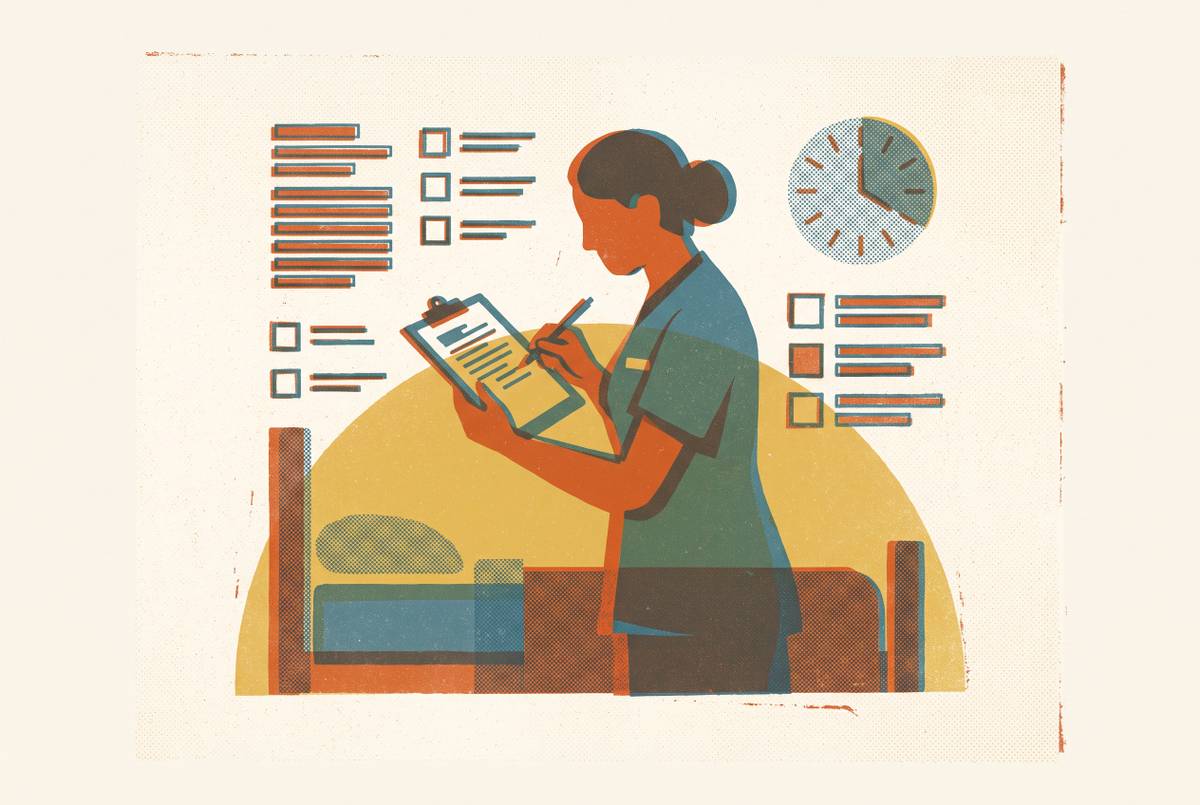
SOAP organizes a clinical encounter into Subjective, Objective, Assessment, and Plan. Subjective records the symptoms and concerns that residents report, including what family and caregivers notice when residents cannot reliably report changes themselves. Objective records measurable or observed findings, including vital signs, wound status, mobility, and diagnostic results. Assessment interprets those findings against the resident’s baseline. Plan sets out the interventions, decisions on escalation, time between follow-up visits, and education.
The format makes clinical reasoning visible to others. Lawrence Weed’s Problem-Oriented Medical Record established the approach from which SOAP descends, emphasizing the reasons for decisions when recording events. In skilled nursing facility practice, SOAPIE adds Intervention and Evaluation to show what care was planned, what care was given, and how the resident responded. Those additions are particularly useful when ongoing skilled care needs justification.
Why SOAP note quality is a facility-level risk factor, not just a clinical habit
A documentation gap becomes part of the record used by the next nurse, the reimbursement team, and the surveyor. A finding without an interpretation or response gives each reader an incomplete account of care. The familiar documentation principle, “if it was not charted, it was not done,” captures why intended care is not evidence of delivered care.
That problem creates exposure across three connected functions. Payment under the Patient-Driven Payment Model depends on evidence to support resident assessment coding, while surveyors check whether the care plan includes assessed needs and whether staff acted on them. At the bedside, continuity depends on whether another nurse can recognize a trend from prior notes. These are not separate documentation obligations. When a functional decline goes unrecorded, it can weaken the case for payment, leave a fall-risk plan out of date, and keep the next shift from knowing that the resident needs more help.
How SOAP notes connect directly to MDS accuracy and PDPM reimbursement
Under PDPM, payment follows the resident’s clinical complexity as coded on the MDS, and that coding must be supported by the clinical record. SOAP notes supply evidence for that support. Functional observations in Objective establish what the resident can do, while Assessment explains the significance of those findings. Copying forward an old assessment or documenting only vital signs leaves relevant status changes outside that evidentiary chain.
The Plan section supports a different payment requirement. Medicare requires evidence that skilled nursing services were medically necessary and provided. A specified intervention, documentation that it occurred, and a subsequent account of the resident’s response support that justification. An order alone does not establish nursing follow-through, and “continue to monitor” without a defined intervention leaves skilled care insufficiently described.
CMS updated its F641 surveyor guidance as of 2025 to explicitly include review of MDS coding accuracy. Consequently, discrepancies between the assessment and its supporting record create both reimbursement and compliance exposure. The clinical note must support the coding rather than leave the facility to explain the mismatch afterward.
Which F-tags surveyors cite most often, and how SOAP note gaps produce them
F656, Comprehensive Care Plans, is one of the F-tags cited most often across the country. A facility may have a care plan, but an unchanged Assessment can leave that plan disconnected from the resident’s present needs. F689, Free of Accident Hazards / Adequate Supervision, is also consistently cited when fall-risk assessments, supervision plans, or interventions are incomplete or outdated. F842, Resident Records – Identifiable Information, covers the broader issue of clinical records that are incomplete or wrong.
These tags expose different breaks in the same chain. CMS’s January 2026 Special Focus Facility update kept the same graduation requirements, which call for two consecutive standard health surveys with 12 or fewer deficiencies at scope and severity level ‘E’ or below. A pre-inspection charting effort cannot substitute for a record that consistently shows current assessment and follow-through.
How the Subjective and Objective sections capture the resident data that drives care plan currency
Subjective and Objective form the note’s surveillance layer. Resident reports can reveal increased need for help with daily activities, pain changes, medication concerns, or new confusion. Family and caregivers can report what they notice about appetite, sleep, and behavior between nursing visits. Objective findings then establish what the nurse observed, including transfer ability, wound dimensions and drainage, intake, and cognitive changes. Vital signs alone cannot show all these aspects of a resident’s status.
Consider a resident reporting an increasing need for transfer assistance. If Subjective captures that report but Objective contains only copied vital signs, the record lacks an observed account of transfer function. If Assessment also remains unchanged, the reported decline never becomes an interpreted fall-risk concern that prompts care plan revision. A later survey can trace the outdated plan back to this structural gap.
What the Assessment and Plan sections must do that most SNF notes fail to accomplish
Assessment turns collected information into a clinical judgment. It must explain what current findings mean relative to the previous note and the care plan. Increasing confusion with low-grade fever, for example, can support a working interpretation of early UTI while declining oral intake leaves dehydration as another consideration. Naming that uncertainty makes the reasoning explicit. Copying a prior problem list does not explain either the change or its implications.
Plan must then convert interpretation into accountable action. It needs the intervention, frequency, responsible party, and expected reassessment point to make an intention to observe specific. SOAPIE makes the distinction clearer by recording what was actually done and how the resident responded. Without that closure, a note can describe a reasonable decision without establishing that care followed. Although specific Assessment and Plan entries require attention, vague entries leave the documentation obligation unresolved and defer work to incident reporting, pressured care plan revision, or appeals of denied claims.
How SOAP note charting connects to falls, skin wounds, and behavioral change — the incident categories that drive survey exposure
A resident may still be listed as low risk because earlier notes left out a decline in transfer ability. After a fall, recording the event, absence of acute injury, and physician notification does not explain contributing factors or changes to supervision. A complete Assessment and Plan supplies that missing reasoning and response. This is the distinction that becomes consequential under F689 scrutiny.
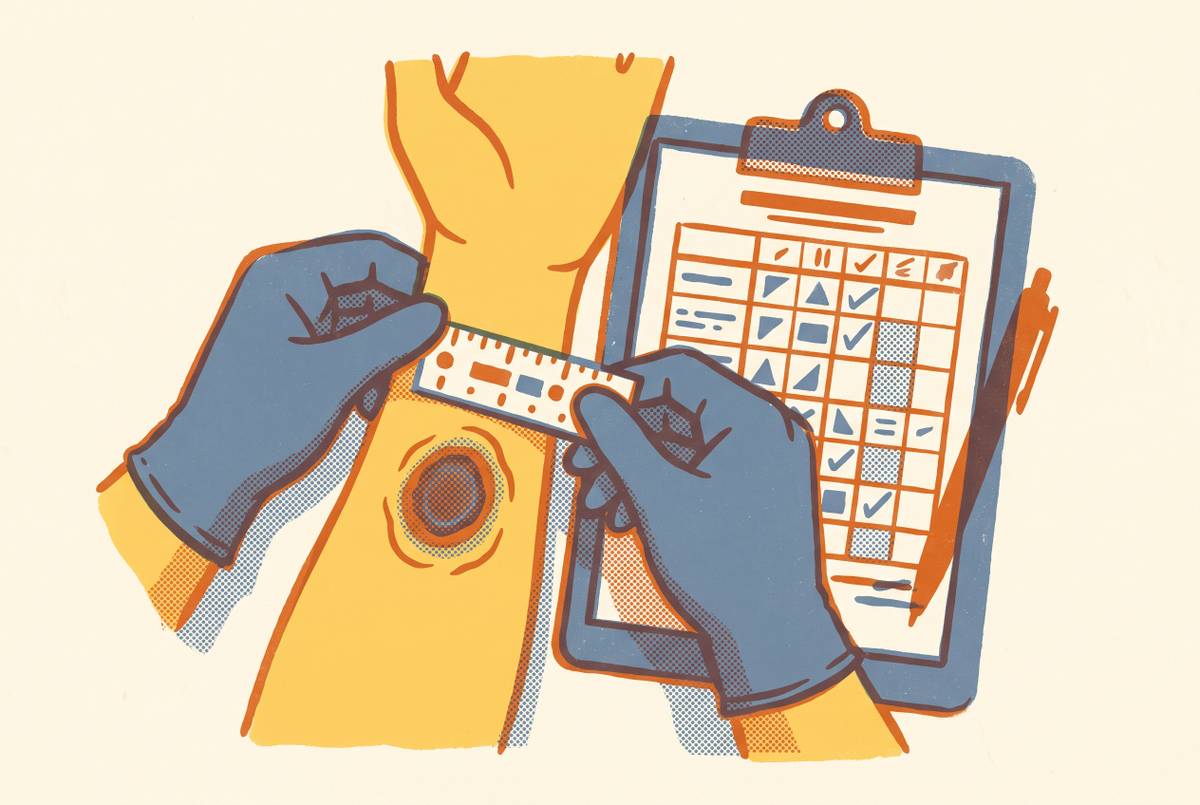
Wound documentation needs observations made over time that can be compared with one another. Dimensions, tissue type, and drainage characteristics establish whether a wound is healing under the skilled plan or deteriorating while the plan remains unchanged. Serial findings make that trajectory available to the care team. Without them, the record cannot reliably show when deterioration became apparent or why an intervention needed revision.
New agitation compared with the previous day’s baseline conveys more than “resident anxious.” When Assessment relates that change to reduced intake or other findings, the note can support intervention for a developing concern before hospitalization. Without context, an early signal of UTI, a medication side effect, or dehydration can remain an isolated description.
Why clinical notes contain predictive information that structured EHR data alone cannot capture
These descriptions also have value beyond retrospective review. Narrative notes contain behavioral observations, functional detail, and clinical synthesis that may not appear in structured fields. Notes can help predict risk because they keep track of changes and links that diagnoses, laboratory results, and vital signs do not fully show. A specific Assessment therefore serves both the next clinician and a model reading the record for deterioration signals.
A predictive hospitalization study published in JAMDA used data from millions of skilled stays across thousands of SNFs. Its model incorporating clinical progress notes and food intake outperformed a version using structured data without those inputs when predicting hospitalization or death within seven days. The comparison removed both inputs. It therefore supports the value of the combined information without isolating the contribution of narrative text.
A 2025 study published in Healthcare looked at how to predict UTI using facts about each facility, such as staffing, bed count, geographic classification, and star ratings. Facility-level facts provide a source of predictive information distinct from clinical notes. For facilities, the documentation implication remains specific. Analytical notes preserve richer information for potential risk detection, while vague, copied-forward entries dilute that signal.
How AI tools that read clinical notes can surface risk signals nursing managers cannot track manually
The obstacle to using narrative information is scale. A nursing manager cannot manually synthesize every resident’s notes across every shift. Natural language processing and machine learning tools can read existing unstructured EHR text without duplicate entry and surface patterns for review. Those patterns can include reduced intake that keeps recurring, new confusion, or changes in condition that have not led to a care plan update. Each finding may seem minor on its own, but the findings over time may call for attention.
That capability does not remove the need for validation. AI can produce inaccurate outputs, including fabricated clinical interpretations, when its design and validation do not fit the SNF population and context. A 2026 preprint on SOAP note hallucination evaluation argues that prevailing methods can also misclassify clinically valid outputs as errors. Facilities should thus insist on SNF-specific validation and choose tools that read and flag notes written by nurses over tools that make clinical judgments in their place.
Rules for how these tools are used are still taking shape. The U.S. Government Accountability Office published its Science & Tech Spotlight on AI for Medical Notes and Coding in July 2026. The FDA’s Center for Devices and Radiological Health released a discussion paper on generative AI-enabled medical device regulation in August 2026. Facilities adopting these tools should track that developing environment as part of implementation.
Why documentation burden is a SOAP note quality problem, not just a nursing satisfaction problem
Better analysis cannot make up for clinical reasoning left out of the notes. Repetitive and duplicative charting consumes the time and attention needed to write specific Assessment and Plan entries. The burden falls unevenly across the note. Required fields and structured flowsheets absorb effort in Objective documentation, including work that is more amenable to automation. Clinical synthesis then receives what remains of the nurse’s time and cognitive capacity.
This makes workload both a documentation-quality issue and a staff satisfaction concern. A completed set of fields can coexist with an outdated interpretation and an undefined plan. For facility operators, the practical response is to direct time recovered from lower-value documentation toward Assessment and Plan quality. Adding more tasks to the shift instead would leave the critical weakness intact, even if charting became faster.
What a survey-ready SOAP note practice looks like as an ongoing facility standard
Assessment should explain each encounter in light of the prior baseline rather than an admission problem list that has stayed the same. Plan should specify interventions and reassessment points, such as “reassess transfer status at 1800, notify MD if decline from current baseline.” Change-in-condition notes should use a consistent SOAP or SOAPIE structure so that escalation decisions are documented when made. Family reports should also reach Assessment when they indicate a change, rather than remain disconnected observations in Subjective.
Technology can help sustain that standard without additional bedside charting. Tools that read notes already in the record can flag repeated risk signals that have not led to intervention or changes in condition that have not led to care plan revision. Their role is to extend managerial review. With those practices embedded in daily workflow, survey preparation no longer has to reconstruct the reasoning behind care. The same operational investment supports defensible reimbursement, current care plans, and earlier risk detection because each depends on a record that connects observation to interpretation, action, and response.