SOAP Note Standards for Long-Term Care Shift Nurses
Choosing the right SOAP format ensures shift handoffs capture what was planned, done, and changed.
Nursing documentation for each long-term care shift needs to show what was planned and how care develops. SOAP note standards thus call for a format that fits the clinical situation. Basic SOAP works for stable-status entries, SOAPIE shows what care was given and how it was evaluated, and SOAPIER shows what changed across shifts. That distinction separates a clinical record that demonstrates responsive care from one that leaves gaps in continuity and compliance.
Why standard SOAP was not built for long-term care shift nursing
Standard SOAP organizes a bounded clinical encounter, while long-term care nursing documents a continuum. Its four fields, which are Subjective, Objective, Assessment, and Plan, establish what the resident reports, what the nurse observes, what those findings mean, and what should happen next. That structure gives an encounter a clear sequence. A resident’s care, however, does not end when a shift does.
Instead, the resident’s condition evolves across days, nights, and weekends, with each handoff carrying unfinished work and new findings. The record must preserve that chain of reasoning. A Plan field establishes intent, but intent alone does not demonstrate completion, response, or adjustment. The structural limitation is therefore not the number of headings on the page, but the distinction between describing proposed care and documenting its course.
What each SOAP field actually requires in a nursing note, and where nurses routinely go wrong
Subjective records the resident’s account, including symptoms, concerns, preferences, and observations reported by family. The source must be explicit because a reported experience is different from a measured finding. A self-reported pain rating is still subjective even when it has a number. In a self-care note, trouble opening toothpaste should not lead to a claim that the resident cannot complete hygiene. That conclusion would erase the distinction between what was reported and what the nurse has established.
Objective records measurable or directly observed findings, with their time and source. This field includes vital signs, wound measurements, intake and output, and observed behavior. In the self-care example, this field establishes what the resident can and cannot do rather than assuming general dependence from one reported difficulty. Normal examination findings should not be added merely to make the section appear complete. Likewise, a value supplied by the prior shift must not read as though the documenting nurse collected it.
Assessment interprets the findings already recorded in Subjective and Objective. Although assessment in the nursing process includes gathering data, A in SOAP explains what those data show about the care concern. Repeating the complaint or inserting the next action leaves that interpretive work undone. The self-care note therefore needs a nursing judgment about the assistance required, without prematurely resolving uncertainty about the cause. The scope of that interpretation depends on the nurse’s designation and jurisdiction and is not a substitute for a physician diagnosis.
Plan translates that interpretation into pending work, identifying the action, responsible person, timing or trigger, and anything outstanding. “Continue care” supplies none of that operational detail. In the self-care example, naming Avery to offer agreed back-care assistance at the stated time identifies ownership and respects the resident’s preference. The entry remains a plan until the assistance occurs.
How SOAPIE closes the gap between what was planned and what was done
SOAPIE becomes useful when the next shift needs to know not just what was intended, but whether it happened and how the resident responded. It adds Implementation or Interventions, recorded as I, and Evaluation, recorded as E. The Toronto Metropolitan University documentation text distinguishes intended interventions from those carried out and connects evaluation to the observed response.
Offering agreed assistance belongs in Plan while it is pending. Once the back has been washed and dried, that completed care belongs in Intervention. The resident’s report that care is complete belongs in Evaluation. If all three states collapse into a Plan entry, the next shift cannot reliably distinguish an intention from a completed action with an observed result.
SOAPIE is therefore appropriate when a specific intervention performed during the shift has an outcome that matters clinically and legally. This includes repositioning, giving medication with the clinical rationale for it, wound care, and a fall-response protocol. Intervention establishes what the nurse did, while Evaluation establishes what followed. Together, they close the evidentiary gap between a proposed action and care whose effect has been assessed.
When SOAPIER applies and what its Revision field proves across shifts
SOAPIER adds Revision when evaluation changes the plan or intervention. Its purpose is to make clinical learning visible rather than leave a changed approach buried in a later note. SOAPIE can adequately document a discrete, resolved intervention. SOAPIER is better suited to complex cases managed across shifts or disciplines when the findings change what happens next.
A wound-care protocol adjusted after three shifts of non-response illustrates the distinction. Intervention records the treatment, and Evaluation records the lack of progress. Revision connects that finding to the changed protocol. Without that connection, a retrospective reader may find both the unsuccessful treatment and the later approach without seeing why the team moved from one to the other.
This longitudinal structure is especially useful for falls, skin wounds, hydration decline, and behavioral changes. Each can represent a trajectory that requires management. Nursing leaders, case managers, and quality improvement teams use the Revision field to track how care is managed by the people who take part. For surveyors, the critical evidence is that the team adapted when the evaluation called for change.
The compliance stakes of documentation format for MDS accuracy, F-tags, and survey outcomes
The clinical record, the resident assessment, and the care plan must tell the same story. The comprehensive assessment identifies needs, the care plan specifies how those needs will be met, and shift documentation validates delivery, monitoring, and adjustment. Format choice affects whether that supporting evidence is easy to trace or incomplete. No format label, however, substitutes for accurate content and alignment between records.
The MDS 3.0 Resident Assessment Instrument is an assessment with standards set by the federal government, required for every resident of a nursing home certified under Medicare or the joint federal-state medical assistance program. CMS states that the MDS 3.0 RAI User’s Manual v1.20.11 will be effective beginning October 1, 2026. MDS coding errors affect PDPM reimbursement, the Five-Star Quality Rating System, and Medicare audit exposure. Shift SOAP notes serve as a primary source record that can corroborate or contradict those coded assessments.
CMS updated surveyor guidance under F641 to explicitly include review of MDS coding accuracy. A discrepancy between a shift note and an MDS fall entry can therefore expose a facility to a deficiency citation. Surveyors exercise judgment, so a single mismatch is not an automatic trigger. The consequence follows from inaccurate or unsupported assessment content.
OIG found that nursing homes left a large share of falls involving major injury and hospitalization among Medicare-enrolled residents out of the required assessments. Falls data help determine which homes are chosen for Special Focus Facility and have long been part of Care Compare quality measures. OIG found those measures inaccurate because of widespread MDS underreporting of falls. This makes fall documentation an important alignment point between the immediate clinical account and the assessment used in quality oversight.
The documentation burden that makes good format discipline hard to sustain
LTC nurses document across overlapping systems, including MDS assessments, care plans, progress notes, and shift SOAP entries. Each is used for a different task later on, and each still needs to be completed even when the others are done. Adding fields can make the record clearer while making it harder to fill out fully every time.
That tension becomes acute when documentation is deferred until the end of a shift. Staying late to finish records leaves less time to recover and adds to burnout, while gaps in the record bring compliance risks. Intervention, Evaluation, and Revision are particularly vulnerable because they require returning to the record after care has occurred. The fields that establish follow-through are thus the fields most exposed to compression under time pressure.
The CNO Documentation Standard, effective February 1, 2026, requires timely, attributable records. A late entry must distinguish when documentation was entered from when the care or action occurred, and corrections must preserve the original information. Delayed charting does not remove those requirements or permit the chronology to be silently rewritten. A proactive documentation review should therefore examine whether the EHR supports completion or creates barriers through incomplete workflows, inconsistent data flow, or missed documentation triggers.
How AI reading existing clinical notes surfaces the risk signals that format gaps conceal
Nurses already record resident symptoms, observations, interventions, and responses in free text, but those details are dispersed across shifts and records. Reading every entry across every resident is not feasible at scale for a human reviewer. AI can analyze those existing notes to surface patterns that remain difficult to see when each entry is read alone.
The distinction is between detecting one event and recognizing a developing trajectory. AI can look at clinical documentation, vital trends, and behavioral changes together and compare patterns with past outcomes to find signs like those seen in earlier deterioration. Joseph Kiernan, chief strategy officer and senior vice president network development at Ocean Healthcare, says AI and predictive analytics help providers spot risks early and act in time in skilled nursing. The relevant categories include falls, skin wounds, hydration, medication response, and behavioral changes.
This approach draws on documentation nurses already produce rather than requiring another workflow layered over their shift. Putting everyday charting to use in care can give nursing managers time back, reduce the risk of regulatory problems, and help staff care for more residents without adding headcount. The distinction remains important, however, between finding a signal in existing text and supplying evidence that was never recorded. AI analysis can reveal a trajectory, but the documentation chain still depends on attributable accounts of care, response, and revision.
A practical format-selection guide for LTC shift nurses by incident category
Falls. Use SOAPIE at minimum for the incident note. Intervention records the immediate response, including the fall protocol, neuro checks, and notification of the physician and family, while Evaluation records post-fall status. Use SOAPIER for follow-up notes when findings lead to changes such as more supervision or a change in fall prevention. The injury level and circumstances in the note must match the MDS fall coding.
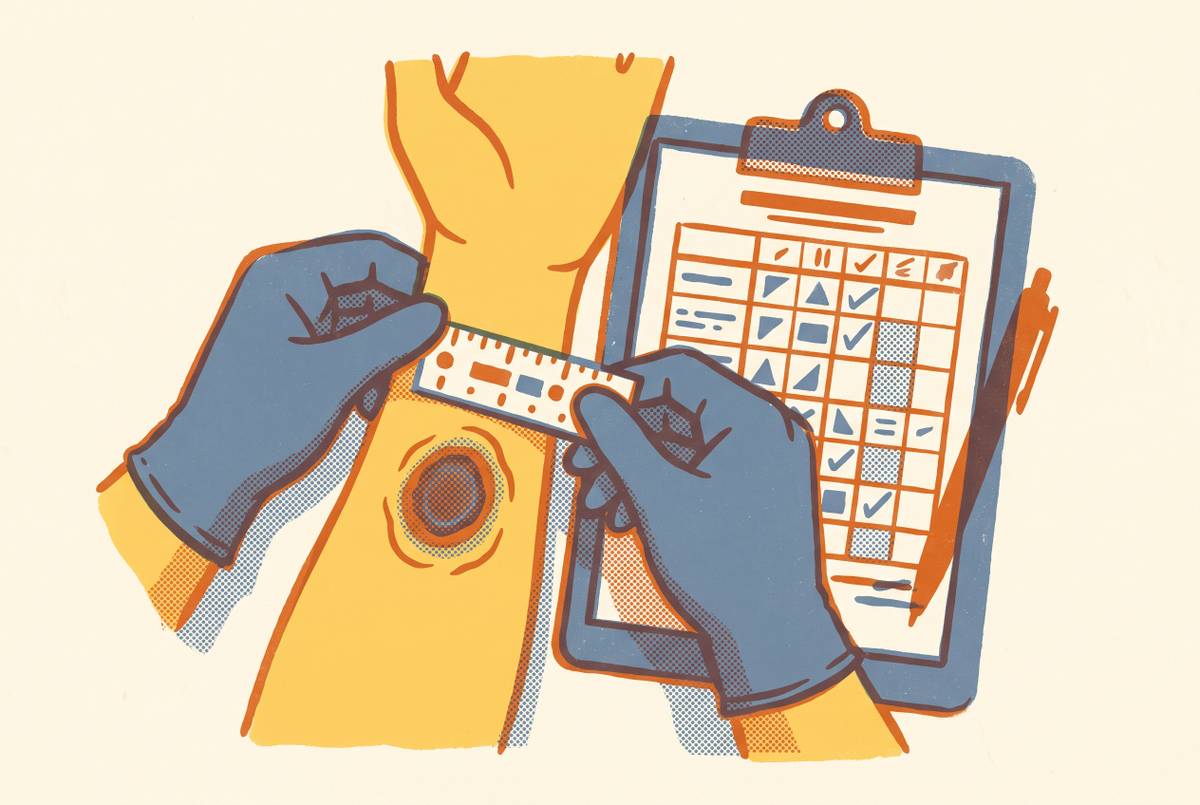
Skin wounds and pressure injuries. Use SOAPIER for notes on wound-care episodes when care needs to be managed over time. Evaluation records wound status after treatment, and Revision records a resulting change in dressing type, frequency, or positioning schedule when the wound fails to progress.
Intervention records the dose, route, and time, while Evaluation records the resident’s response at the follow-up interval. Without Evaluation, the note establishes administration but leaves the medication’s effect undocumented.
Hydration and nutrition concerns. Use SOAPIER when intake falls from one shift to the next. Revision records the changed intervention prompted by the trend, such as a fluid encouragement schedule, thickened liquids order, or dietitian referral.
Behavioral changes. Use SOAPIER for new or escalating behaviors that require management over time. The Revision chain shows how the team changed its approach in response to evaluation. That chain distinguishes documented management of behavioral decline from deterioration without a recorded adjustment.
Stable-status documentation. Use standard SOAP when a routine shift produces no new clinical concern, intervention, or change. SOAPIER adds work and is not needed for every entry. The format should carry the evidence the situation requires without burdening stable entries or under-documenting complex ones.
Timing and attribution. Every entry should be attributable, timestamped, and consistent with the MDS and care plan entries it supports. Under the CNO Documentation Standard, late entries must distinguish entry time from event time, and corrections must retain the original information. Those requirements apply regardless of format, because even a complete sequence of fields cannot establish a reliable record when its timing or authorship is unclear.